Polycystic ovarian syndrome (PCOS) is a hormonal disorder that affects about 10-13% women of reproductive age around the world. It causes irregular periods, infertility, excess hair growth, and cysts in the ovary. It is mostly caused by hormonal imbalance, genetics, and lifestyle habits. In most cases, PCOS remains undiagnosed. It can be treated if you want to get pregnant.
PCOS is caused by hormonal imbalance. This hormonal imbalance is the result of the ovaries producing excess androgen hormone, which is a male hormone. Androgen imbalances other female hormones and causes irregular menstruation and ovulation. In some cases of PCOS, cysts are formed on the ovary, which are filled with fluid and immature eggs. They are not painful or harmful, but can increase androgen hormone and cause missed periods and other symptoms.
In Ayurveda, Polycystic ovarian syndrome (PCOS) is not seen as a single disease; it is rather correlated with conditions like Pushpagni jataharini, which is characterized by obesity and hairy cheeks, and Artava kshaya, which is a deficiency of menstrual fluids. These conditions are caused by the imbalance of the three doshas (Vata, Pitta, and Kapha), which affect the Artavavaha srotas (reproductive channels). Treatment is focused on balancing the doshas and detoxifying the body.
Symptoms of PCOS
- The most common symptom is irregular periods, missed periods, or no period at all, which may be accompanied by heavy bleeding during periods.
- Infertility is mostly caused by PCOS, as ovulation is unpredictable and not regular and frequent, so it becomes harder to conceive.
- About 70% people with PCOS experience excess hair growth on their face, limbs, chest, and stomach.
- PCOS can cause acne on the back, face, and chest, which can be persistent and hard to treat.
- About 40-80% of people with PCOS have trouble maintaining an ideal body weight that is healthy for them.
- In many PCOS cases, there are cysts growing in the ovaries, which are filled with fluid and immature eggs that are hard to see in an ultrasound.
- In PCOS, hair on the head starts getting thin, and people start to get bald.
- Darkening of the skin may be seen in many areas, such as the folds of the neck, armpit, groin, and under the breasts.
- In some cases of PCOS, there might be no symptoms at all. PCOS remains undiagnosed until the person is unable to get pregnant and puts on weight without any proper reason.
Causes of PCOS
The exact cause of PCOS is still not known, mostly associated with genetics. Other factors that may cause PCOS are-
- Hormonal imbalance- High levels of the male hormone androgen can cause anovulation, which is no ovulation. This causes irregular menstrual cycles, which in turn can cause fluid-filled sacs to develop in the ovaries, which are known as cysts. Androgen also causes acne and excess hair growth on your body.
- Insulin- When insulin levels rise in your body, it can cause excess production of the male hormone androgen, which suppresses ovulation and causes other symptoms of PCOS. High insulin levels can cause high glucose levels in your body, leading to diabetes, but not always. Obesity can also cause high insulin levels.
- Low-grade inflammation also causes PCOS, as most of the cases of PCOS are found to have low-grade inflammation.
In Ayurveda, the main cause of PCOS is the imbalance in the three doshas, primarily the Kapha dosha, which causes blockage in the reproductive channel (srotas), which leads to cyst formation. Other causes are Vata, which is responsible for the movement and release of the ovum, an imbalance of which causes irregular periods. Ama (toxins) production is caused by weak Agni (digestive fire), and Ama is responsible for cutting hormonal signaling and insulin resistance. Genetics, poor diet, and lifestyle habits are also reasons for PCOS.
Diagnosis of PCOS
If you have any of the above symptoms and you think you might have PCOS, then you should meet with a health care provider who can diagnose it. To diagnose PCOS, doctors will ask some questions about your symptoms, medical history, family medical history, and medications. After the question, doctors may perform a physical examination and a pelvic examination for further knowledge about your condition. A pelvic ultrasound is done to check for cyst growth on the ovaries, the thickness of the uterine lining, and other causes of heavy bleeding. Blood tests are done to check the hormone levels in the body, which are the most common cause of PCOS.
In Ayurveda, the diagnosis of PCOS is done by Ashtavidha pareeksha (eight-fold examination), which includes Nadi pareekshan (pulse exam), Jihva pareekshan (tongue examination for toxins), and Mal/Mutra pareekshan (urine and stool analysis), clinical history, dosha imbalance diagnosis, and Samprapti (Agni, srotarodha, and dhatus dushti).
Treatment of PCOS in Ayurveda
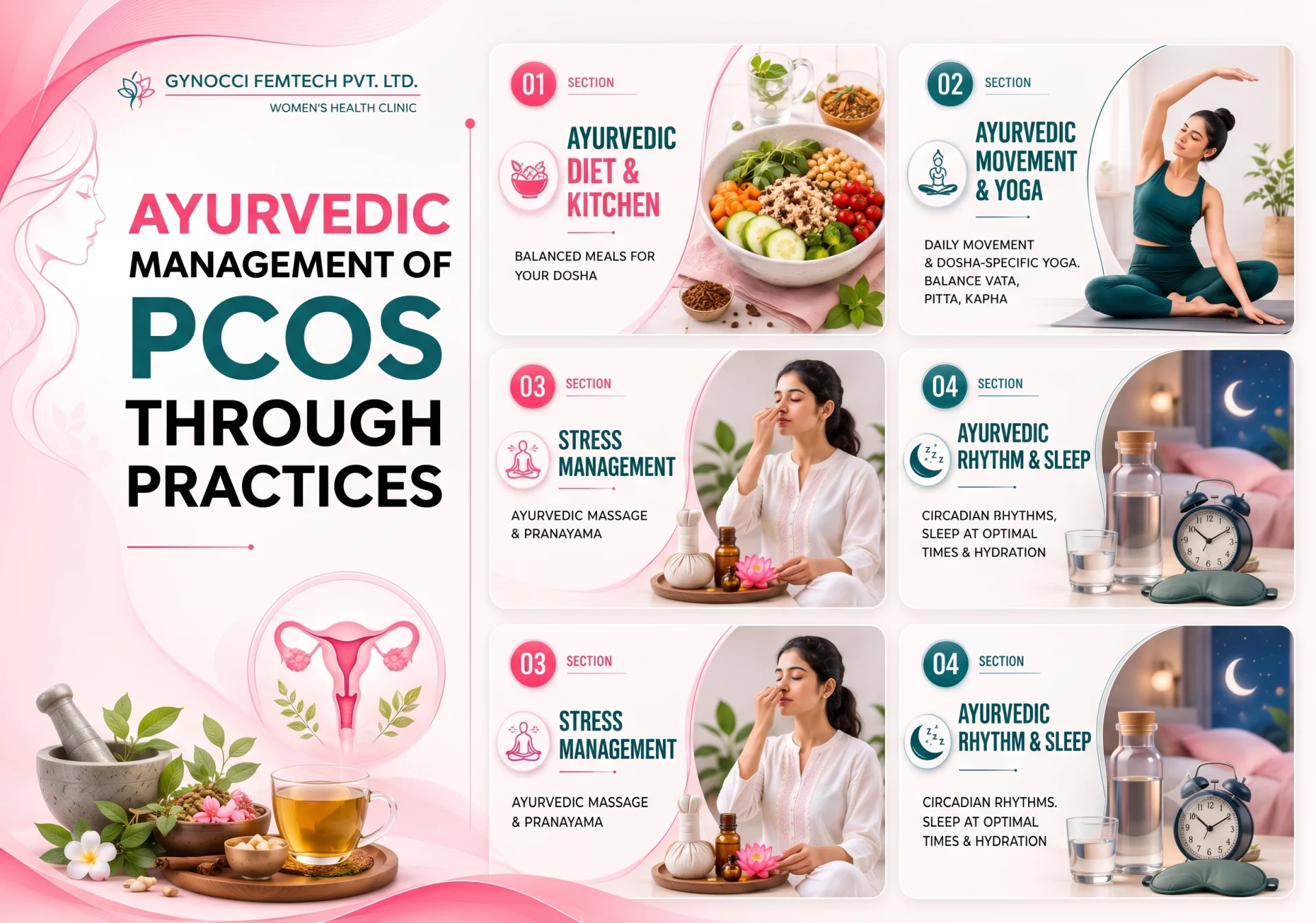
Treatment in Ayurveda focuses on balancing the dosha, strengthening Agni, and removing toxins by various Ayurvedic Panchkarma therapies, herbs, and diet and lifestyle changes. You must read the diet plan for a PCOS diagnosed patients
- Panchkarma therapies- The following therapies detoxify the body
- Virechana- It is known as purgation, and it helps remove toxins from the body with the help of maintaining the menstrual cycle by balancing the Vata and Pitta.
- Vamana- It is vomiting with the help of herbs to remove excess kapha, which helps in weight management and balances the endocrine system.
- Basti- It is a medicated enema which involves the use of medicated oils to treat Vata-related disorders like PCOS, and it improves reproductive health.
- Uttar Basti- It is also a type of enema in which medicated oils are introduced into the uterus to directly treat cysts and improve fertility.
Herbal medications and formulation-
- Herbs like Shatvari, which helps in ovulation, Ashoka, which acts as a uterine tonic, Ashwagandha, which helps in reducing stress, and Guduchi, which improves metabolism.
- Herbal formulations like Kanchanar guggulu are used to treat cysts, Chandraprabha vati, which balances hormones, Kumaryasava, which acts as a digestive and uterine tonic as well, and Rajahpravartini vati, which helps in inducing periods.
In addition, Triphala and Trikatu (ginger, pepper, and long pepper) help in detoxification and boost metabolism.
Diet and lifestyle changes
Ayurveda recommends easily digestible foods, which stimulate Agni. These include warm, freshly cooked foods, green leafy vegetables, lentils, whole grains, and spices like turmeric, ginger, and cinnamon. Avoiding oily, heavy dairy, cold, and processed foods is recommended.
Lifestyle changes include doing daily light exercise, yoga poses (like butterfly pose, dhanurasan, and suryanamaskar), reducing stress through meditation, and managing a healthy routine like waking up early and sleeping enough.
Modern Science vs Ayurveda in PCOS treatment
| Aspect | Modern Science | Ayurveda |
| Approach | Symptom & Hormone Regulation Based | Root-cause focused (dosha balance, Agni, detox) |
| Goal | Manage symptoms & improve fertility | Restore natural cycle & hormonal balance |
| Cycle regulation | Birth control pills, hormonal devices | Dosha balancing + herbal formulations |
| Hormonal Control | Metformin, androgen blockers | Herbs like Shatavari, Ashoka, Kanchanar Guggulu |
| Fertility Support | Ovulation-inducing drugs, IVF | Uttar Basti, herbs to support natural ovulation |
| Advanced Treatment | Surgery (rare), IVF | Panchkarma therapies (Virechana, Basti, Vamana) |
| Detox focus | Limited | Strong focus (Panchkarma detox therapies) |
| Lifestyle role | Supportive (diet, weight control) | Core treatment (diet, yoga, daily routine) |
| Speed of results | Faster symptom relief | Gradual but long-term improvement |
| Side effects | Possible (hormones, medications) | Minimal when supervised properly |
Limitations of Modern Treatment
- Focuses mainly on symptom management, not root cause
- Hormonal medicines may cause side effects & dependency
- Results often stop when treatment stops
- IVF & procedures can be costly and emotionally stressful
Why Choose Ayurveda?
- Ayurveda focuses on root-cause healing by balancing hormones naturally, detoxifying the body, and restoring regular cycles without dependency.
- Improves natural ovulation
- Supports long-term hormonal balance
- Uses herbs, Panchkarma & lifestyle correction
- Don’t just manage PCOS, treat it at the root. Visit Gynocci and get a personalized Ayurvedic treatment plan for lasting results.
FAQs
What is the best cure for PCOS?
The best cure for PCOS is incorporating a healthy lifestyle and diet. Along with Ayurvedic treatment, these methods are very helpful in the treatment of PCOS.
What is the most common cause of PCOS?
The exact cause of PCOS is unknown, but hormonal imbalance, genetics, and insulin resistance are the most common factors that can cause PCOS.
Is PCOS a serious problem?
Yes, PCOS is a chronic, metabolic, and hormonal condition that not only causes fertility issues but also, if it is left untreated, can cause high BP, type 2 diabetes, heart issues, and endometrial cancer.