The process of reproduction in females is carried out by the ovaries, fallopian tube, and the uterus. The eggs are produced in the ovaries and are passed through the fallopian tubes to reach the uterus. When these tubes are blocked, they can hinder the process of fertilization and may result in infertility. These blockages are called tubal blockage.
Tubal blockages affect about 25-35% of females in India and are one of the main causes of fertility.
What is unilateral blockage?
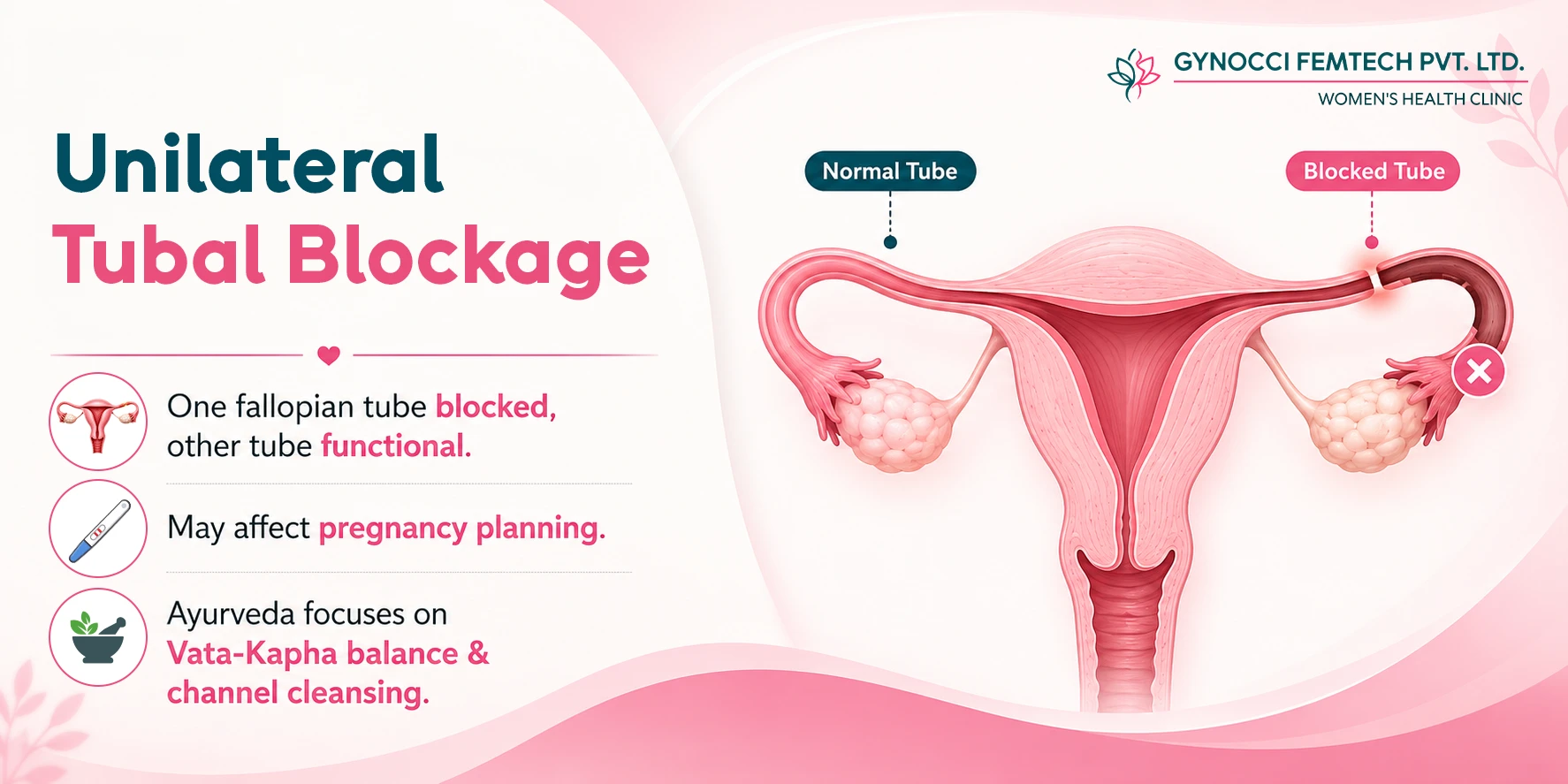
The condition in which only one of the fallopian tubes is blocked and other tube remains unaffected and fully functional is known as unilateral blockage. There a lot of reasons for swollen and blocked fallopian tubes such as sexually transmitted infections (STIs), pelvic inflammatory disease (PID), past surgeries and endometriosis.
In Ayurveda unilateral tubal blockage is known as Artava vaha srotas dushti which is dysfunction of the reproductive channels. It is categorized in the Sanga type of srotadushti, which is the obstruction in the movement of beeja (the female gamete). It is caused due to the imbalance in the Vata and kapha dosha.
Diagnosis of Unilateral tubal blockage
The health care experts start diagnosis of this disease by asking questions about the symptoms. After this they use other diagnosis methods like-
Hysterosalpingogram- This is the first step in diagnosis and in this a dye is injected into the cervix to visualize the uterus, the tubes and other organs using x-rays. If the dye flows through one tube and does not flow through the other tube then unilateral tubal blockage is confirmed.
Some hysterosalpingogram tests show false positives for blocked tubes. This can be due to short period muscle spasm or mucus present in the tubes. To confirm the presence of tubal blockage the doctors ask you to change your position during the x-rays.
Hysterosalpingo contrast sonography (HyCoSo)- It is similar to hysterosalpingogram but it uses ultrasound instead of X-rays. It uses air contrast solution or saline to visualize the organs to check for unilateral blockages.
Laparoscopy with chromopertubation- In this method doctors perform a small surgical procedure in the abdomen. A long small thin tube with a camera on the top is inserted through the small incision and a blue dye is injected into the cervix to visualize the blockages in the tubes.
Treatment of Unilateral tubal blockage
Ayurveda treatment of unilateral tubal blockage is focused on balancing the vata dosha and clearing the blocked tubes with the help of Ayurvedic therapies and herbal medication.
Panchkarma therapies- Panchkarma is a process of detoxification and balancing the doshas. It is used alongside other herbal medicines and therapies. It includes-
- Virechana- it is therapeutic purgation used to cleanse the blocked reproductive channels and balance Pitta and vata dosha.
- Vamana-It is therapeutic emesis to improve mainly the kapha related blockages.
- Basti- It is a medicated enema mainly lekhana basti , to remove blockages from the lower abdominal region and balance the vata dosha.
Herbal medicine
- Kanchannar guggulu- It is used to reduce blockages and outgrowths.
- Pushpadhanva rasa- It helps in improving fertility and support ovarian function.
- Phala ghrita- It helps increase endometrial receptivity and kind of renews the reproductive system.
- Chandraprabha vati- It is helpful in cleansing and strengthening the reproductive system.
FAQs
What happens if one side of the fallopian tube is blocked?
If one side of the fallopian tube is blocked there is still a high chance of pregnancy because the other fallopian tube is still fully functional and gametes can move through it and get fertilized resulting in pregnancy.
How to treat unilateral tubal blockage?
Treatment in modern medicine includes laparoscopic surgery while in Ayurveda panchkarma therapies and herbal medication and formulations are used to treat unilateral tubal blockage.
What happens if both fallopian tubes are blocked?
When both the fallopian tubes are blocked the male and the female gamete will never meet and there will be no chance of natural pregnancy. This leads to infertility.