Chronic Pelvic Pain in Females
Chronic pelvic pain has become a common issue for a large number of women. It affects about 15% to 25% of women around the world, which means 1 in every 6 women is affected by pelvic pain. Chronic pelvic pain can also be seen in men, and it affects about 2% to 10% of men. Chronic pelvic pain is the pain in the lower abdomen that lasts more than 6 months. It can be an independent disease or can be caused by other conditions such as Pelvic inflammatory disease or endometriosis. Treatment includes medication, Ayurvedic therapies, herbs, and, in some cases, surgery.
According to Ayurveda, Chronic pelvic pain is a result of imbalanced doshas, primarily Vata dosha, and is known as Sroni Yoni sula. It causes pelvic inflammation and pressure on the pelvic area. Treatment involves Ayurvedic therapies such as basti, uttar basti, sthanik chikitsa, herbal medicines, and diet and lifestyle changes.
Causes of chronic pelvic pain
Chronic pelvic pain can be caused by other conditions, but sometimes, during diagnosis, no other condition is found, and in some cases, there is more than one condition that can cause chronic pelvic pain. Conditions that cause pelvic pain are-
- Pelvic inflammatory disease (PID) - This is caused by sexually transmitted infections that are left untreated and cause scarring in the reproductive organs, leading to pelvic pain.
- Endometriosis – It is a condition in which tissue similar to the lining of the uterus grows outside the uterus and causes pain and leads to infertility.
- Bone and muscle-related issues- Problems like hernia, fibromyalgia, inflammation in the pelvic joint, etc., affect joints, connective tissue, and bones, and can cause persistent pelvic pain.
- Nerve injury- Nerve injury can happen during activities like cycling, horse riding, etc., which is known as pudendal neuralgia, or surgeries can also cause nerve injuries, which lead to pelvic pain. It is a condition where a nerve of the pelvic region gets trapped or injured.
- Surgery- During a surgery to remove one or both ovaries, a small tissue of the ovaries can be left behind, which forms cysts that cause sharp pain in the lower abdomen near the pelvic region.
- Fibroids- These are non-cancerous growths on or in the uterus, which can cause heaviness in the pelvic area but rarely cause chronic pelvic pain.
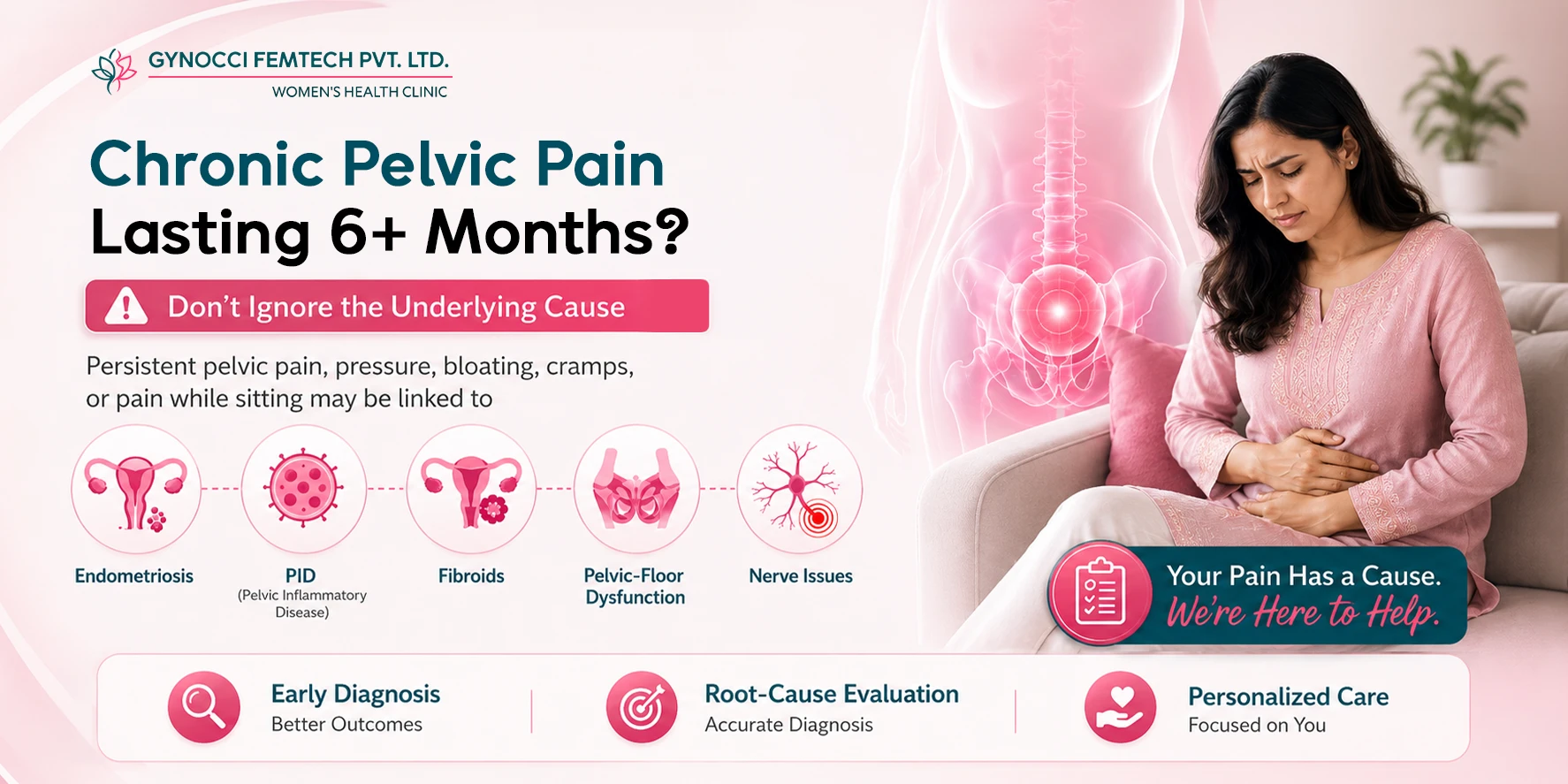
Symptoms of chronic pelvic pain
Symptoms of chronic pelvic pain depend on the conditions causing it. Chronic pelvic pain can be felt in different pelvic organs. The symptoms include-
- Pain that comes and goes
- Dull ache
- Pressure or heaviness in the pelvic area
- Pain during intercourse
- Pain due to sitting for longer periods
- Frequent urge to pee
- Bloating
- Constipation or diarrhea
- Cramps in the lower abdomen
If you have any symptoms that indicate chronic pelvic pain, you should get diagnosed before taking any medication.
Diagnosis for chronic pelvic pain
Diagnosis of chronic pelvic pain includes medical history, physical exam, imaging test, etc.
- Medical history- The doctors will ask about your medical history, symptoms, and family medical history.
- Physical examination- The doctors will perform physical exams, such as vaginal or rectal exams, to check for abnormalities in the inner muscles and tissues.
- Imaging test- Imaging tests include a pelvic ultrasound to check for abnormalities. Magnetic resonance imaging is used to check for conditions like endometriosis and structural abnormalities.
- Lab tests- Laboratory tests include a urine test for UTIs, blood tests, and vaginal swabs to check for infections.
- Laparoscopy- It is a process in which a small cut is made in the abdomen, and a thin, long pipe is inserted to see the internal organs and treat endometriosis.
If the diagnosis shows positive results, which indicate other conditions or no condition causing the pelvic pain, both can be treated. Consult a health care professional before doing anything yourself.
Treatment of chronic pelvic pain
In Ayurveda
Treatment in Ayurveda is focused on balancing the three doshas and removing toxins through various Panchkarma therapies, herbal medicines, formulation, and yoga. The treatment involves-
Ayurvedic therapies
Basti
It is a type of medicated enema in which medicated oil is incorporated into the uterus and vagina to nourish them and reduce pain in the pelvic area. Basti also includes Uttar Basti and is the primary treatment to balance the Vata dosha.
Sthanik chikitsa
It is also known as local treatment, and it includes-
- Yoni pichu- In this method, medicated tampons with oil are incorporated in the vagina to provide relief from inflammation and act as an antiseptic.
- Yonidhavan- It is the cleansing of the vagina through medicated decoction, which helps reduce pain and inflammation.
- Abhyanga- This method includes massaging with medicated oils to improve pelvic circulation and pain relief.
Herbal medications-
- Kanchanar guggulu- It is used to treat fibroids, inflammation, and adhesion.
- Pushyanug churna- This medicine is useful in all gynecological disorders and pelvic pain.
- Ashwagandha- It helps reduce stress and cortisol levels, reduces inflammation, and helps relax pelvic muscles.
- Shatavari- It acts as a uterine tonic and helps manage pelvic pain by reducing inflammation and balancing hormones.
Lifestyle and diet
Doing yoga to strengthen the pelvic area and relax the pelvic muscles and the floor is recommended. Dietary changes include eating warm, freshly cooked, nutrient-rich food to balance the doshas.
To get the best treatment, it is important that you consult an expert Ayurvedic doctor. Because everyone has different prakriti (constitution) and vikriti (imbalance), they should be treated accordingly.
In modern medicine
Treatment of chronic pelvic pain includes different treatment approaches like physical therapies, medication, and surgery. Along with these lifestyle and diet changes, they also help in speedy recovery and relief.
- Physical therapy- Physical therapy includes pelvic floor physical therapy, myofascial release, and strengthening exercises to help release muscle tension.
- Medications- Medications include the use of pain relievers like anti-inflammatory drugs, hormonal treatment like birth control pills, hormonal therapies, progesterone therapies, nerve pain and muscle relaxers, and antidepressants.
- Surgery- Minimal cut surgeries like laparoscopy are used to remove fibroids, endometriosis, and adhesions, which cause pain.
Treatments depend on the individual's symptoms and the root cause of pelvic pain. Lifestyle changes like daily exercise and taking a balanced and nutrient-rich diet are very helpful in reducing pain and stress.
FAQs
What to do about chronic pelvic pain?
If you think that you have chronic pelvic pain, the first thing you should do is get diagnosed and find out the root cause of the pelvic pain. Then you can get yourself treated with various available therapies and medication according to the symptoms and causes.
What is the cause of chronic pelvic pain?
The cause of pelvic pain can be an underlying condition like endometriosis, pelvic inflammatory disease, fibroids, nerve injury, etc., but in some cases, the cause of chronic pelvic pain remains unknown.
How to naturally cure pelvic pain?
To naturally cure pelvic pain, you can do warm massages, take a warm bath, eat warm, easily digestible foods, and do light yoga and exercise to ease pain and relax pelvic muscles.