Menorrhagia (Heavy Menstrual Bleeding) - Causes, Symptoms & Treatment Options
Menorrhagia or heavy menstrual bleeding is a condition which is common in people of the reproductive age. In this condition women bleed more and longer than normal. Heavy bleeding along with cramps can create an issue and get in the way of your daily life. In Ayurveda, heavy menstrual bleeding is termed as Asrigdara or Raktapradara which is heavy and prolonged bleeding during or between menstrual cycles.
What is Menorrhagia?
Menorrhagia is condition in which women of the reproductive age bleed more and longer than usual during menstrual cycles. Various conditions characterize menorrhagia like longer periods, bleeding abnormally and irregularly, big blood clots and difficulty doing normal day to day tasks.
In Ayurveda, heavy bleeding or menorrhagia is known as Asrigdara or Raktapradara, which is heavy bleeding and prolonged menstruation. This happens mainly due to imbalance or Pitta dosha, Rakta dhatu and Apana vata. Ayurveda focuses on restore dosha with the help of Ayurvedic herbs and formulation.
Due to this condition many people are scared when their menstrual cycle starts because it decreases confidence to go out in public due to high bleeding and discomfort. There is no shame in getting treated for this because it is quite common and affects 25% to 55% prople of the reproductive age. Treatment helps ease discomfort and boosts confidence.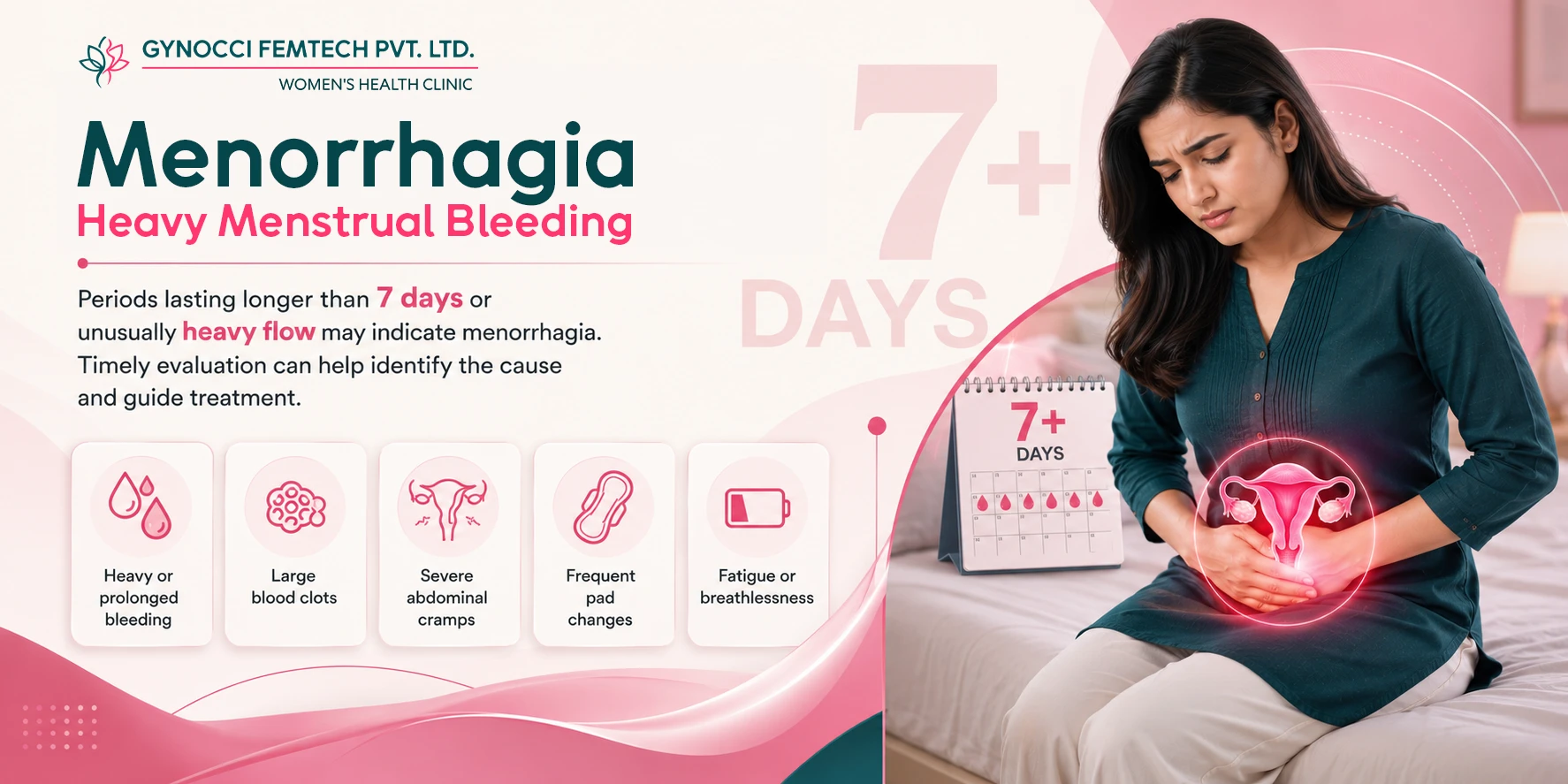
Causes of Menorrhagia
There are various conditions responsible for heavy menstrual bleeding from hormonal conditions to infections, diseases and medicines.
Hormonal conditions
When the hormones that regulate the menstrual cycle, like estrogen and progesterone, get imbalanced then they can heavy bleeding. Hormone imbalance can be caused due to other condition which include-Polycystic ovarian syndrome (PCOS), Thyroid diseases, Anovulation, a condition where the ovaries do not release an egg during menstrual cycle and being overweight.
Benign conditions
Non-cancerous outgrowths in the uterus or abnormal cell growth in the uterus can cause heavy periods leading to heavy bleeding. These benign outgrowths can be Fibroids, polyps or Adenomyosis.
Infections
Infections include sexually transmitted diseases like- Trichomoniasis, gonorrhea, Chlamydia and endometritis can cause heavy bleeding during menstruation.
Malignant conditions
Cancerous growth in the uterus like uterine cancer and cervical cancer can cause heavy bleeding.
Treatment and medication
Some treatments and medication can also cause heavy menstrual bleeding. These include birth control pills, Intrauterine devices, hormone replacement therapies, birth control implants, breast cancer drugs and blood thinning medications.
Other causes
Other conditions include liver diseases, kidney disease, Blood cancer, Pelvic inflammatory disease etc. cause heavy bleeding.
Symptoms of Menorrhagia
The symptoms of menorrhagia include-
- Having periods that last more than seven days.
- Abdominal cramps or severe pain.
- Passing pink, red or brown colored blood clots more than once or twice. The size of the blood clots can be as big as an inch.
- Losing more than 80ml of blood while the normal amount of blood loss during period is 30-50 ml. It is twice the amount than normal that can cause longer periods.
- The need to change pads in the middle of the night due to heavy flow.
- Using 2 layers of pads at once due to the fear of leakage.
- Drained out of energy and breath due to blood loss.
- Leakage through 2 or more sanitary pads or tampons consecutively in 2 hours.
If any if these symptoms show up, you should get yourself checked and get the right treatment required.
Diagnosis of Heavy Menstrual Bleeding
To diagnose menorrhagia the first thing doctors do is ask you a series of question like your age, duration of your period, duration of heavy bleeding and pain, family medical history of menorrhagia, conception methods used and medications used. You should know all these details.
The doctors can use some tests to diagnose heavy menstrual bleeding
- Ultrasound- A pelvic ultrasound is performed which uses sound waves to project an image of the pelvis on a screen.
- Blood test- Blood is tested to check for iron deficiency (anemia), clotting issue and thyroid diseases.
- Transvaginal ultrasound- This is used to see internal organs and structure of tissues.
- Magnetic resonance imaging (MRI)- When the doctors can get enough information through ultrasound they suggest MRI to see better in the uterus and its structure for abnormality.
- Cervical culture- It is used to check for infections in the reproductive tract or the uterus.
- Cancer diagnosis- To check if the bleeding is caused by cancer, tests to diagnose uterine or cervical cancer with the help of endometrial biopsy and Pap smear are done.
Other Diagnosis Methods
Other methods include son hysterogram in which the uterus is filled with saline to see the lining of the uterus and hysteroscopy is used to check for the presence of fibroids, polyps or other outgrowths in the uterus which can cause bleeding.
Treatment of Menorrhagia
The treatment of menorrhagia in Ayurveda and modern differs significantly. Modern medicine focuses on treating this disease with hormonal treatment and surgical methods that give fast symptomatic relief while Ayurveda follows a holistic approach and focuses on bringing balance in overall body and treats the root cause of the disease.
In Ayurveda
Treatment of menorrhagia in Ayurveda includes balancing doshas (mainly pitta dosha), and detoxification of body through herbal medicine, Ayurvedic therapies, diet and lifestyle changes.
Therapies
- Panchkarma – In panchkarma Virechana therapy is used to balance Pitta dosha.
- Uttar basti- In this procedure medicated oil or ghee is filled in the uterus to improve overall uterine health.
Herbal medicines
Herbal medicines include-
- Shatavari- It helps reduce heavy bleeding and balances hormones.
- Ashokarishta- It used to reduce bleeding and regulate overall menstrual cycle.
- Lodhra- It is known to strengthen tissue of the uterus and controls bleeding.
- Chandraprabha vati- It balances hormones and improves overall reproductive health.
Diet and lifestyle changes-
Including pomegranate, green leafy vegetables and milk products in diet helps get essential nutrients. Avoiding spicy, salty, sour and fried foods is recommended as they can imbalance the pitta dosha.
Keeping your body hydrated with coconut water or water boiled with cumin or coriander.
A little bit of exercise daily can improve overall health and reduce stress.
Modern Medicine Treatment
In modern science, treatment mainly depends on the severity of the symptoms and age of the patient.
Medicines and Hormone Therapies
Medicines like iron supplements, non-steroidal anti-inflammatory drugs and birth control pills are used to help improve iron levels, ease menstrual cramps and pain and regulate period. Hormonal medications include hormone replacement therapy to balance the level of estrogen and progesterone in your body and reduce bleeding.
Procedures
The treatment can be done by many procedures like Hysteroscopy which can diagnose and treat heavy menstrual bleeding by surgically removing the cause of bleeding, Myomectomy which removes fibroids, uterine artery embolization that stops the blood flow from tumors, Hysterectomy that includes removal of the uterus to stop you from having periods ever after and endometrial ablation in which all of the uterus lining or some part of it is destroyed.
At Gynocci the health care providers use Ayurvedic medication and natural ways to treat this disease. With modern medicine you may have side effects of the medication or hormone therapy but with Ayurveda there is no chance of side effects and any other effects of the medicines and procedures used.
FAQs
How many days does Menorrhagia last?
During normal periods bleeding lasts for 2-3 days but in case of menorrhagia it can last more than seven days.
How do you treat PCOS Menorrhagia?
To treat Menorrhagia due to PCOS, there are various methods like balancing hormones with medicines or HRT and progesterone therapy.
At what age does Menorrhagia occur?
It can occur at any age from menarche to menopause. It is more common in the age group going through the perimenopausal stage and adolescents.