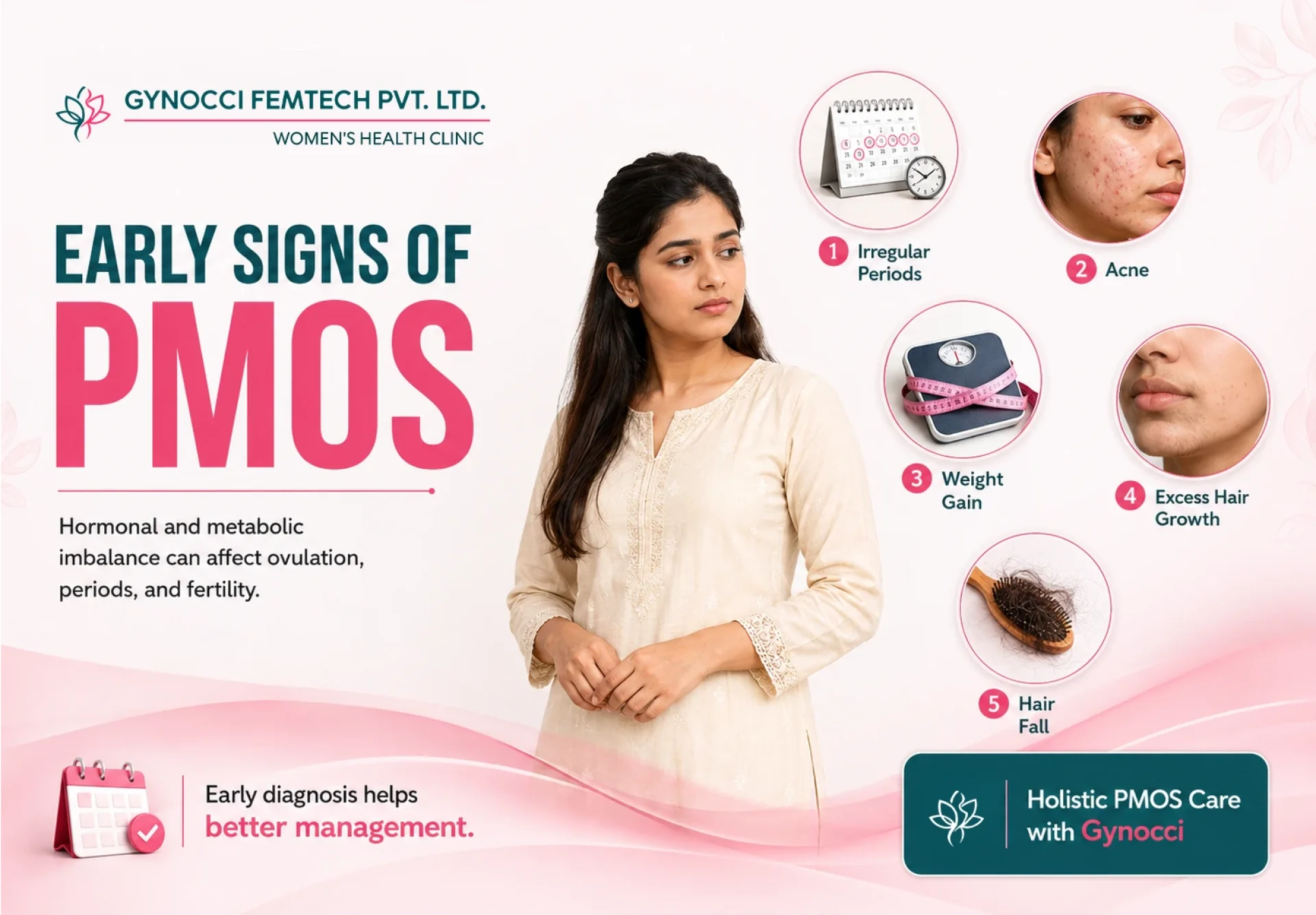
Polycystic ovarian syndrome, now known as Polyendocrine metabolic ovarian syndrome, is a hormone-related health issue. PMOS affects the menstrual cycle and ovulation in women of reproductive age. It has various symptoms that may appear during the very first menstrual cycle, and in some cases, symptoms develop a while after the first cycle.
What is PMOS (Formerly PCOS)?
PMOS is a condition related to the female reproductive system. In this condition, the ovaries release an excess amount of the androgen hormone, which is a male hormone. Excess of androgen causes an imbalance in other female hormones. As a result, women with PMOS experience irregular menstrual cycles, missed periods, and unpredictable ovulations. It is one of the most common causes of infertility in females.
In Ayurveda, Polyendocrine metabolic ovarian syndrome (PMOS) is not viewed as a disease of the reproductive system, but it is seen as a complex disorder of the whole body. Ayurveda treats PMOS as an imbalance of doshas and body tissues, and its treatment is focused on root-cause healing.
Some early symptoms of PMOS
Understanding early signs and symptoms of PMOS is very crucial, as most women who experience symptoms of PMOS neglect them, thinking they are normal changes. But early checkup and diagnosis are very helpful in the management and treatment of the disease. These symptoms include-
1. Hirsutism
It is a condition in which women experience excessive hair growth in areas where hair grows on the face, chest, stomach, and back. It is one of the common signs of PMOS. This hair growth is due to increased levels of the male hormone, the androgen hormone.
2. Irregular Menstrual Cycles
One of the major symptoms of PMOS is irregular menstrual cycles. Women go through fewer than 9 menstrual cycles in a year, with more than 35 days of gap between the cycles or heavy bleeding. In some cases of PMOS, women do not have a menstrual cycle for months, which is mostly due to no ovulation.
3. Acne
Women with PMOS face persistent acne that does not go away even after treatment. Acne is normal during teenage years, but if they do not go away, it can be due to PMOS. Most commonly, they are formed on the chin and jawline and become intense during menstrual cycles.
4. Weight Gain
During PMOS, many women face hard and rapid fat deposits in the abdominal area that do not go away. This fat gain is due to Insulin resistance, which comes free with PMOS. It disrupts blood sugar regulation and results in weight gain. In this condition, even if a person tries to lose weight, it becomes nearly impossible. This increases the risk of Type 2 diabetes and other metabolic disorders.
5. Acanthosis Nigricans
Due to insulin resistance, dark and thick patches develop on the skin, most commonly on the neck, armpits, and underside of the breasts. These patches are confused with dirt or pigmentation, but are the earliest symptoms of hormonal or metabolic issues in the body.
6. Male Pattern Baldness
On one hand, PMOS causes excess body hair, and on the other hand, it causes hair thinning on the head. This thinning looks similar to male pattern baldness, as the hair slowly gets thinner on top of the head. Thinning is caused by the androgen hormone, and it is progressive if not treated properly.
7. infertility
Infertility is very common if a woman has PCOS. It can be caused by no ovulation or irregular ovulation. This creates problems with natural conception. Most people try to conceive but are unable to do so, and they do not even try to connect this problem with PMOS.
When to see a doctor?
If the symptoms of PMOS remain for a long time and affect daily life, you should consult a doctor. If symptoms like acne, unwanted weight gain, dark skin patches, excessive hair growth, and infertility show up, you should meet a health care provider, or if you’re having irregular menstrual cycles for more than 3 months.
Treatment of PMOS is available in both Ayurveda and modern medicine, which helps regain the ability to conceive naturally or through assisted reproductive techniques. Early diagnosis and treatment help in the proper management of the disease.
Treatment
Treatment of PMOS in Ayurveda is focused on the root cause, and the treatment involves balancing doshas and nourishing reproductive tissues to strengthen the reproductive system and balancing the overall metabolism of the body. While modern medicine focuses on treating signs and symptoms, it uses ART methods to help parents conceive.
Why choose Gynocci?
For the effective management of PMOS, Gynocci offers a holistic solution led by medical experts that targets the root cause of the disorder rather than just addressing its signs. Recognizing that hormonal and metabolic imbalances vary for every individual, Gynocci provides a fully customized treatment program. This comprehensive approach incorporates traditional Ayurvedic therapies like Panchkarma, specialized herbal formulations, and personalized guidance on diet and lifestyle.
Call: 845 0000 845
Visit: Gynocci.com
Gynocci - Hope Begins With Us.
FAQs
Do the symptoms of PMOS differ from one woman to another?
Yes, signs and symptoms of PMOS can vary from person to person. Some people may only have one symptom, while others can have a lot of symptoms.
How to diagnose PCOS early?
Early diagnosis of PCOS involves keeping an eye on the symptoms. There are two main symptoms to diagnose PCOS: irregular periods and an ultrasound showing cyst-like formations on the ovaries.