Ovarian cysts are common, sac-like outgrowths on or inside the ovary. Most cysts are harmless, asymptomatic, and disappear on their own without the need to get treated. The other cysts that become large and do not go away can show symptoms and need medical care. Regular checkups can help in the early detection and treatment of these cysts.
What are Ovarian Cysts
Ovarian cysts are fluid-filled sacs that grow on or inside one or both ovaries. There are various kinds of ovarian cysts, one that is painless, non-cancerous, and shows no symptoms. You won’t even know that you have cysts without checkups. The others that grow large can cause symptoms like pelvic pain, irregular periods, and bloating.
Types of ovarian cysts-
Functional ovarian cysts- These are the most common cysts, and they form as a result of ovulation. These cysts are normal and disappear within 60 days. These include Follicular cysts, which are formed when ovarian follicles do not release an egg and the follicles get filled with fluid, and Corpus luteum cysts, which are formed when the follicle releases an egg, it becomes a hormone-releasing structure which disappears when conception does not take place, but sometimes it gets filled with fluid and forms a cyst.
Other ovarian cysts- Other types of cysts include Cystadenomas, which are formed on the surface of the ovary, Dermoid cysts, which have cells similar to hair, skin and teeth and are non-cancerous, Endometriosis are cysts that are filled with menstrual blood and are mainly due to Endometriosis, and Ovarian cancer cysts which are cancerous cells formed in the ovary and are harmful.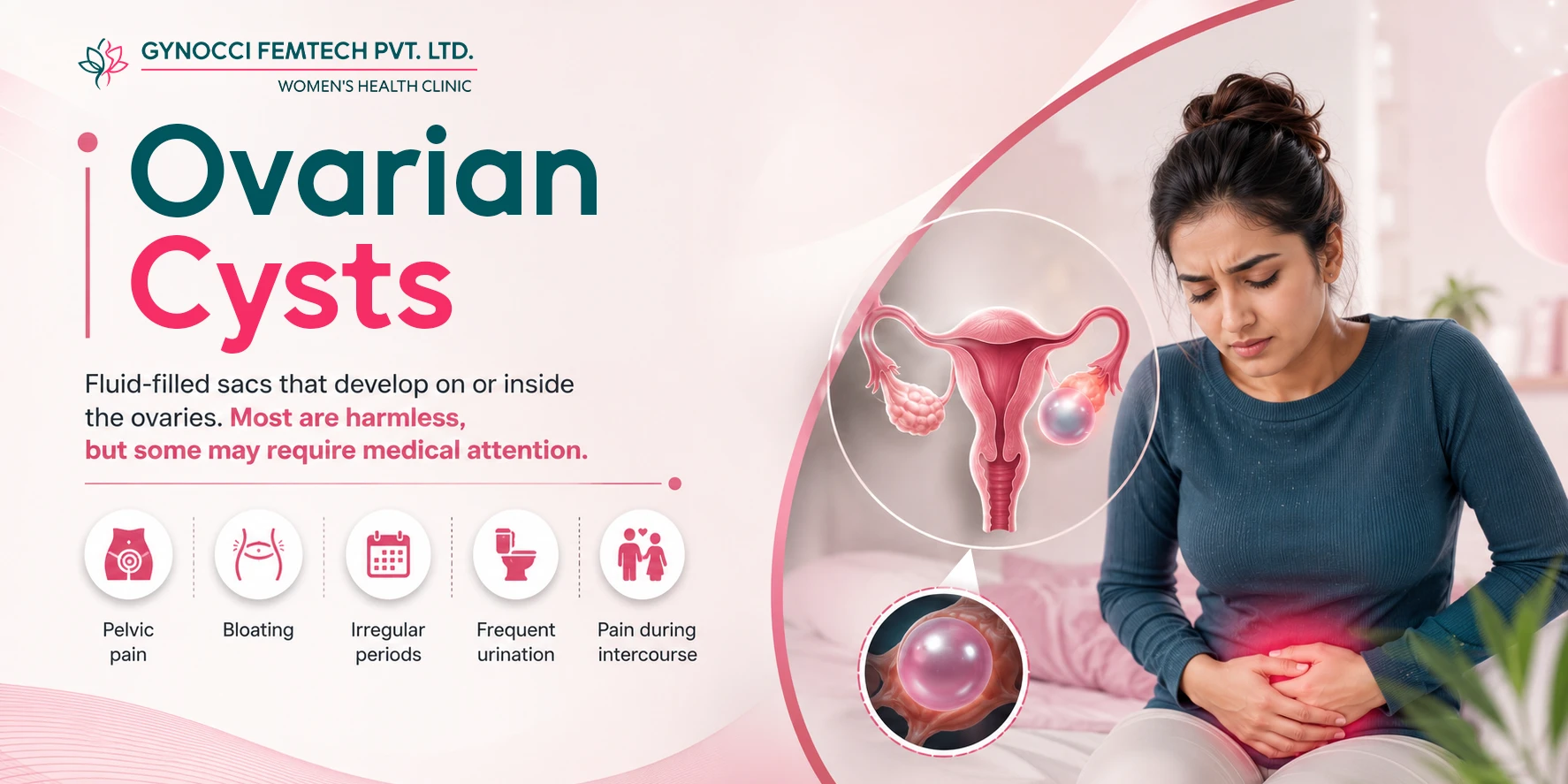
Symptoms and causes of Ovarian cysts
The smaller cysts are asymptomatic and can remain unnoticed. These cysts are not harmful and might disappear on their own. Larger can show symptoms like-
- Pelvic pain or back pain
- Bloating in the lower abdomen.
- Irregular and painful periods.
- Pain during sex.
- Urge to pee frequently and trouble pooping.
These are the symptoms that may indicate polycystic ovarian syndrome (PCOS, now renamed to PMOS), which causes irregular periods, heavy bleeding during the menstrual cycle, and difficulty conceiving.
Causes
It can be caused by various factors, but ovulation is the main cause, which happens during each menstrual cycle. Other causes include-
- PCOS- Polycystic ovarian syndrome can cause a lot of cysts to form on the ovaries.
- Endometriosis- Due to severe endometriosis, cysts are formed on the ovaries.
- Pelvic inflammatory disease (PID)- A pelvic infection that becomes severe may spread to the ovaries and cause the formation of Ovarian cysts.
- Cell reproduction- Abnormal reproduction can cause the formation of cystadenomas.
Ayurvedic perspective on ovarian cysts
According to Ayurveda, ovarian cysts are related to Kaphaja Granthi (Cystic swelling), which is caused by the imbalance in the Vata and Kapha dosha and impurities in Rasa and Rakta dhatu. This imbalance can be caused by poor diet, sedentary lifestyle, and stress. Ayurveda aims to eliminate these cysts by balancing the doshas with therapies and herbs, along with a healthy diet plan.
Treatment of cysts in Ayurveda
Ayurveda has a holistic approach to the treatment of cysts. In Ayurveda, the treatment is more focused on the root causes. The treatment includes-
- Panchkarma- Panchkarma therapies like Virechana (purgation therapy), Basti (enema), and Udvartana (dry powder massage) are given to reduce kapha dosha and adipose tissue.
- Herbal remedies- Herbal medicines like Kanchanar gugulu (anti-tumor), Varunadi kashaya (reduces fat buildup), Punarnava Mandoor (anti-inflammatory), and Triphala are used for detoxification.
- Diet and lifestyle- Eating a personalized healthy diet recommended by the doctors, stop eating kapha-increasing foods like sugar and dairy products, reducing stress, and regular exercise and yoga.
At Gynocci, you can meet and consult the doctors, and they will provide you with the best treatment and diet plan. Gynocci has a proven record of successfully treating a lot of reproductive health diseases with the help of experienced health care specialists with BAMS and an MD in Ayurveda.
Treatment in modern medicine
In modern medicine, treatment is based on the symptoms and severity of the disease. The treatment includes oral medications that stop ovulation, and surgical procedures like Laparoscopic surgery and laparotomy are used to remove the cysts by making a small or larger incision in the patient’s abdomen, depending on the size of the cyst. If it is a cancerous cyst, you may need to consult a cancer specialist.
FAQs
What is the major cause of ovarian cysts?
Most of the ovarian cysts are caused by ovulation, which is a normal process happening during the menstrual cycle. Other causes include PID, PCOS, and endometriosis.
How to treat an ovarian cyst during pregnancy?
Most of the ovarian cysts go away on their own, so the best thing is to wait and see if the cyst goes away, but if it is painful and does not go away, then surgery might be needed.
What is the best treatment for an ovarian cyst?
The best treatment for cysts depends on the symptoms and size of the cysts. Most of them do not require treatment and disappear, but others can be treated with oral medicine or a surgical procedure.