There are many reproductive issues in males, and liquefaction issues account for one of those. Liquefaction issues are quite common among men who are evaluated at andrology clinics. About 10-12% of males are affected by liquefaction issues. This is less common among the fertile population. It is highly treatable in both Ayurveda and modern medicine.
What is liquefaction?
Liquefaction is the natural process in which the freshly ejaculated semen, which is initially gel-like, transforms into a watery, fluid state. This process takes about 20-30 minutes with the help of prostatic enzymes, but a liquefaction process of 60 minutes is also considered healthy.
The liquefaction process
The process includes ejaculation, which is the release of semen, which is initially sticky, and it helps to adhere to the cervix. The enzymes from the prostate gland, like prostatic protease, break down the protein matrix within 20-30 minutes, and this helps liquefy the sperm, which helps it swim to the egg and fertilize it.
What is abnormal liquefaction?
There are two types of liquefaction issues
Delayed liquefaction: If the semen remains in the gel-like form even after 60 minutes, it can be classified as delayed liquefaction.
Semen hyperviscosity: In this condition, the semen, even after liquefaction, remains excessively thick and sticky.
This can be caused by-
Prostate dysfunction
Seminal vesicle imbalance
Hormonal imbalance
Prostatitis
Reproductive tract infection
Dehydration
Oxidative stress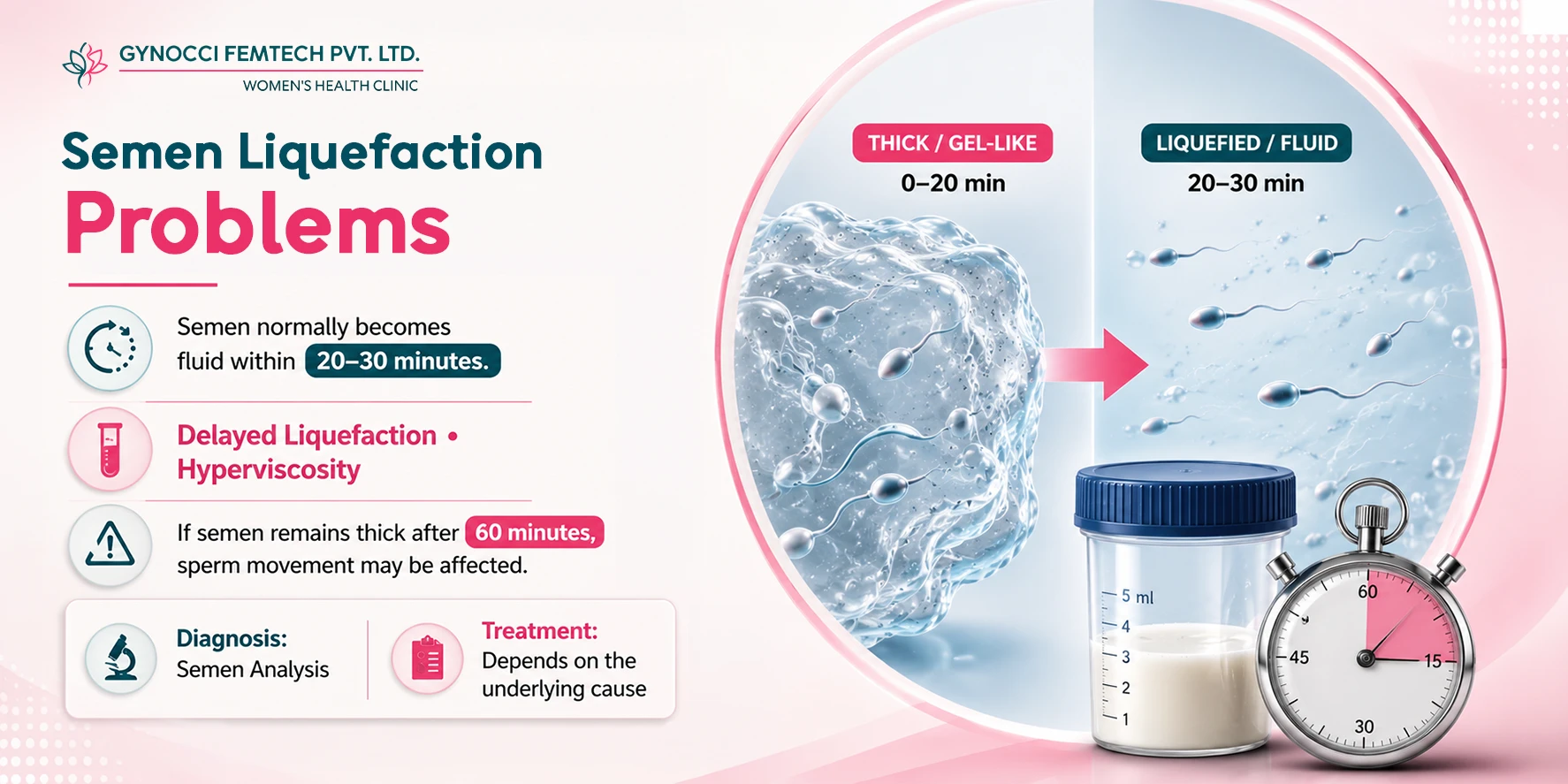
Treatment of liquefaction issues
In Ayurveda, poor semen liquefaction, or thick and sticky semen (Shukra Dosha), is considered an imbalance of the Kapha and Vata doshas. This condition may worsen with the accumulation of metabolic toxins (Ama). Treatment focuses on detoxification, restoring internal balance, and supporting male reproductive health (Shukra Dhatu).
1. Shodhana (Purification & Detoxification)
Ayurveda health care experts recommend detoxification to restore fluid balance and clear blockages in the body's channels (Srotas).
Virechana: Therapeutic purgation is frequently utilized to balance Kapha and Pitta and enhance metabolic function.
2. Shamana (Balancing & Pacification)
Once the body is detoxified, herbal formulations are prescribed to target seminal viscosity directly and improve overall sperm health.
Vajikarana (Aphrodisiac) Herbs: Herbs like Ashwagandha (Withania somnifera) and Gokshura (Tribulus terrestris) are used to nourish reproductive tissues and improve semen quality.
Medicinal Ghee (Ghrita): Formulations such as Phala Ghrita are commonly used to nourish the Shukra Dhatu and promote liquefaction.
Specific Decoctions: Preparations such as Pathadi Kwatha or Varanadi Kasaya are traditionally used to treat Kaphaja Shukra Dushti (disorders caused by Kapha excess).
3. Dietary and Lifestyle Adjustments
Ayurveda places a strong emphasis on addressing the root cause through diet and daily habits to prevent the recurrence of Ama (toxins).
Dietary Focus: A Kapha-balancing diet is advised. This includes incorporating warming spices and avoiding heavy, oily, or cold foods.
Agni Deepana: Herbs and procedures meant to kindle the digestive fire are used to ensure proper assimilation of nutrients, which in turn improves the quality of tissues.
FAQs
How to treat liquefaction in sperm?
The treatment of liquefaction includes finding out the root cause of the issue, which is mostly prostate enzyme imbalance and dehydration. It can be treated with some lifestyle and diet changes, like keeping yourself hydrated, eating a zinc-rich diet, and quitting smoking.
How long does sperm liquefaction take?
Sperm liquefaction time is the time taken by the semen to transform from a gelatinous state to a liquid state, which is about 20-30 minutes. Liquefaction time up to 60 minutes is normal, but more than that is considered a liquefaction issue.