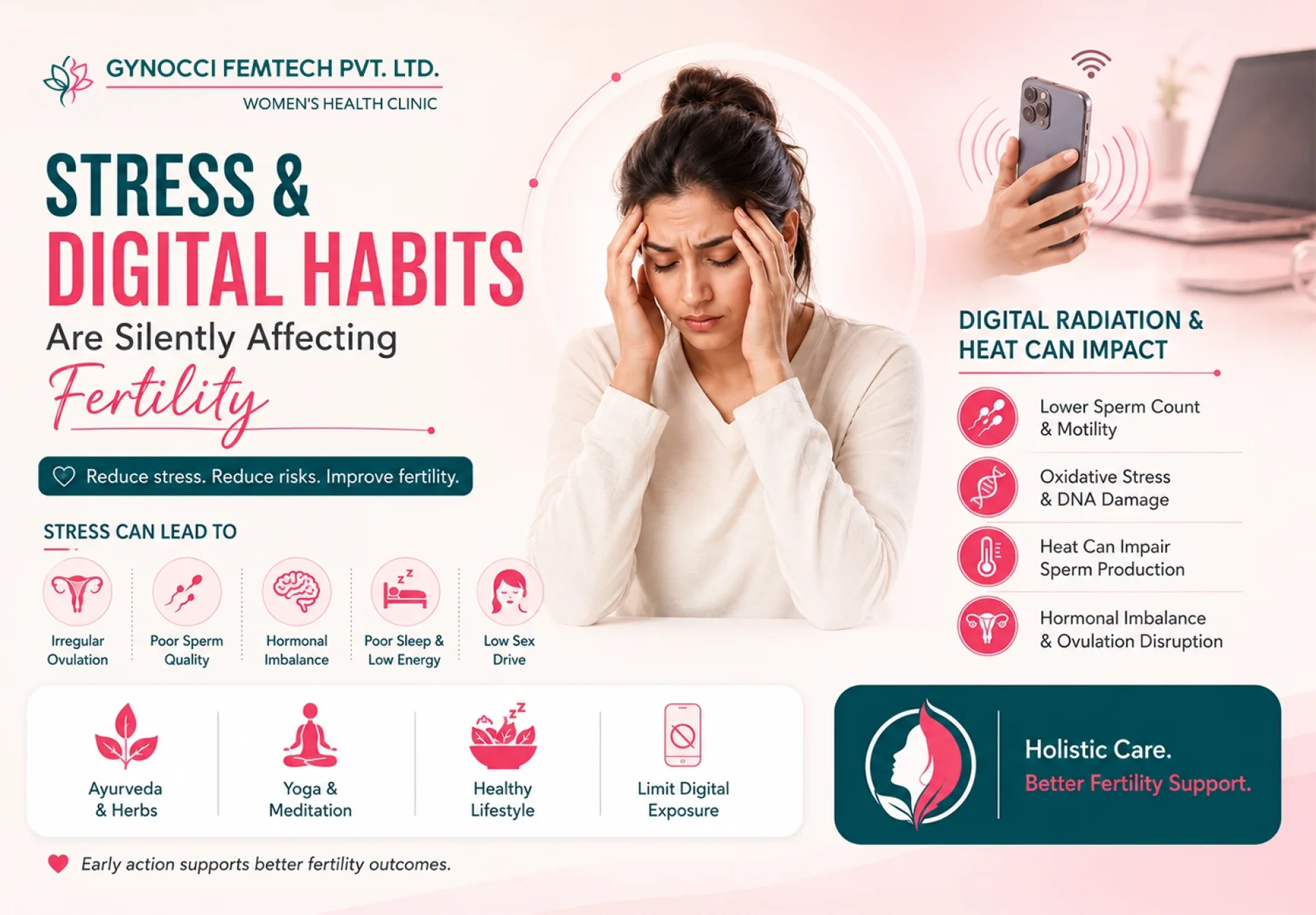
Nowadays, there are a lot of problems with conceiving and fertility, and stress plays a major role in them. Although stress does not directly affect fertility, it can cause problems in conception. Digital radiation and heat from phones are also considered harmful for human reproductive health, but is it really the case? Does radiation from phones cause infertility?
How does stress affect fertility?
Several studies have shown that there is a deep connection between stress levels and fertility of both women and men. When the body is stressed, the brain produces cortisol, which is a stress hormone. This hormone interferes with the functioning of the ovaries and their signal to the brain, which in turn affects the release of the egg and disrupts the ovarian cycle. Cortisol not only affects females’ ovarian cycle but is also well known to affect motility and sperm production in males.
There is an enzyme named alpha amylase, which is found in the saliva of females, indicating stress levels. When the level of this enzyme is high, it takes longer for women to get pregnant than women who have less alpha amylase in their saliva.
Due to oxidative stress, there are also behavioral and mood changes, which lead to low sex drive in both men and women. To deal with stress, some people also start smoking and drinking alcohol, which can further lead to fertility and conception issues.
There have also been cases of stress-related miscarriages. In a study, it was found that in about 10-20% of total miscarriages, stress and anxiety played a major role. In some cases of ART, some women conceive on the first try, while others struggle for years, and in some cases, the reason behind failure is not known, which creates even more stress, sleep deprivation, and caffeine intake, which further deteriorate the chances of pregnancy.
Impact on treatment results
In many cases, stress has also been found to negatively impact treatment and its results. There are studies conducted on psychological symptoms before and during ART (Assisted reproductive technology), and it was found that those with high stress levels before and during the treatment had lower conception rates. It was confirmed that stress causes fertility issues by the presence of cortisol in hair samples and alpha amylase in the saliva in people with conception issues.
Managing stress
You can manage stress with the help of Ayurveda, exercises, therapy, and meditation. The first step towards managing stress is identifying the reason behind it. Take the help of a professional to manage and find out the reason. There are also therapies, herbs, and yoga poses in Ayurveda that reduce stress.
Herbs: Ayurveda incorporates adaptogenic herbs like Ashwagandha, Brahmi, and Tulsi that lower cortisol levels, improving sleep and mental clarity.
Therapies: - Stress-relieving therapies like Abhyanga (self-massage with herbal oils) and Shirodhara (pouring of warm oil on the forehead) calm the nervous system and reduce anxiety.
Diet: - A sattvic diet is recommended, which maintains the digestive fire (Agni) and stabilizes the mood.
Yoga and pranayama: Pranayama and meditation are important aspects of stress management and Vata-Pitta balance.
How does digital radiation affect fertility?
Every day, electronic devices such as smartphones, laptops, Wi-Fi routers, and other wireless technologies emit low levels of non-ionizing electromagnetic radiation. While the levels are very low, prolonged and frequent exposure to this radiation, especially when kept near the body, may be associated with reduced sperm quality, low sperm count, decreased motility, and increased oxidative stress. In the case of females, there is very limited evidence to support a direct link between digital radiation and reproductive health.
How digital radiation impacts fertility in males
Male reproductive organs are located externally, which makes them more vulnerable to heat and external radiation.
Reduced sperm quality: Exposure to RF-EMF, when carrying a smartphone in your pocket or using a Wi-Fi-connected laptop on your lap, is known to reduce sperm count and motility and create abnormal morphology.
Increased stress: Digital radiation can trigger an overproduction of reactive oxygen species (ROS). This stress can lead to DNA fragmentation, which reduces the chances of natural pregnancy and increases the risk of miscarriage.
Heat effects: - Smartphones and laptops generate heat. A slight increase in scrotal temperature, even by 1°or 2°C, can impair sperm production and survival chances.
Hormonal imbalance: Prolonged use of digital devices late at night disrupts sleep cycles, which hinders the production of melatonin. Melatonin protects sperm from stress, and depletion of melatonin can lead to low testosterone levels and impaired testicular function.
How digital radiation impacts fertility in females
While female reproductive organs are protected deep inside the body and also less exposed to radiation and external heat, higher-energy radiation can still have a negative impact on reproductive health.
Ovarian stress: Prolonged and intense exposure to RF-EMF can impact ovarian function and uterine health by increasing oxidative nitrosative stress (cellular damage caused by an imbalance between reactive oxygen species and reactive nitrogen species and the body’s antioxidant defences.
Hormonal imbalance: - Hormonal pathways which regulate ovulation are disrupted due to chronic stress and fatigue associated with constant screen time.
Still, there are not many studies that can back up the claims that digital radiation can lead to infertility. Yes, there are some harmful effects, and we should minimize exposure to digital radiation for the sake of overall health.
Steps to reduce exposure to digital radiation
Here are some ways you can minimize exposure-
- You don’t need to keep your phone in your pocket; you can keep it in your hands or place it on a table or a flat surface.
- Women can carry their phones in their handbags, and men can keep their phones in other jacket pockets or on their arms with arm bands.
- It is advised to limit phone usage during pregnancy and avoid putting the phone on your belly.
- While driving, you can keep your phone in the cup holder or glove box, or you can also use a mobile phone holder rather than putting it between your legs or in your pocket.
Try using a speakerphone or earphones (wired or wireless) while on calls and reduce putting your phone against your body.
Conclusion
Stress and digital radiation do affect fertility, and somewhere they cross paths, too. While a little bit of stress is normal and mobile phones do not emit harmful radiation, prolonged exposure can cause certain complications in both men and women. Management of stress and digital radiation exposure reduction can help a lot with having a normal conception and good reproductive health.
Frequently asked questions
Can mental health affect fertility?
Yes, mental health affects fertility. High levels of stress, anxiety and depression can disrupt ovulation in women and sperm production in men. Poor mental health can also cause behavioral changes like low sex drive and coping behavior like smoking and alcohol intake.
Does electromagnetic radiation cause infertility?
This topic is highly debated and there is still research going on. While high intensity ionizing radiations (like X-rays) may cause infertility, the claims for non- ionizing radiations causing infertility is still mixed.
Does using laptop reduce sperm count?
Yes, using laptop while resting it directly on you lap can lead to low sperm count, motility and DNA integrity. This is caused due to the heat emitted by the laptop and radiation from the Wi-Fi.