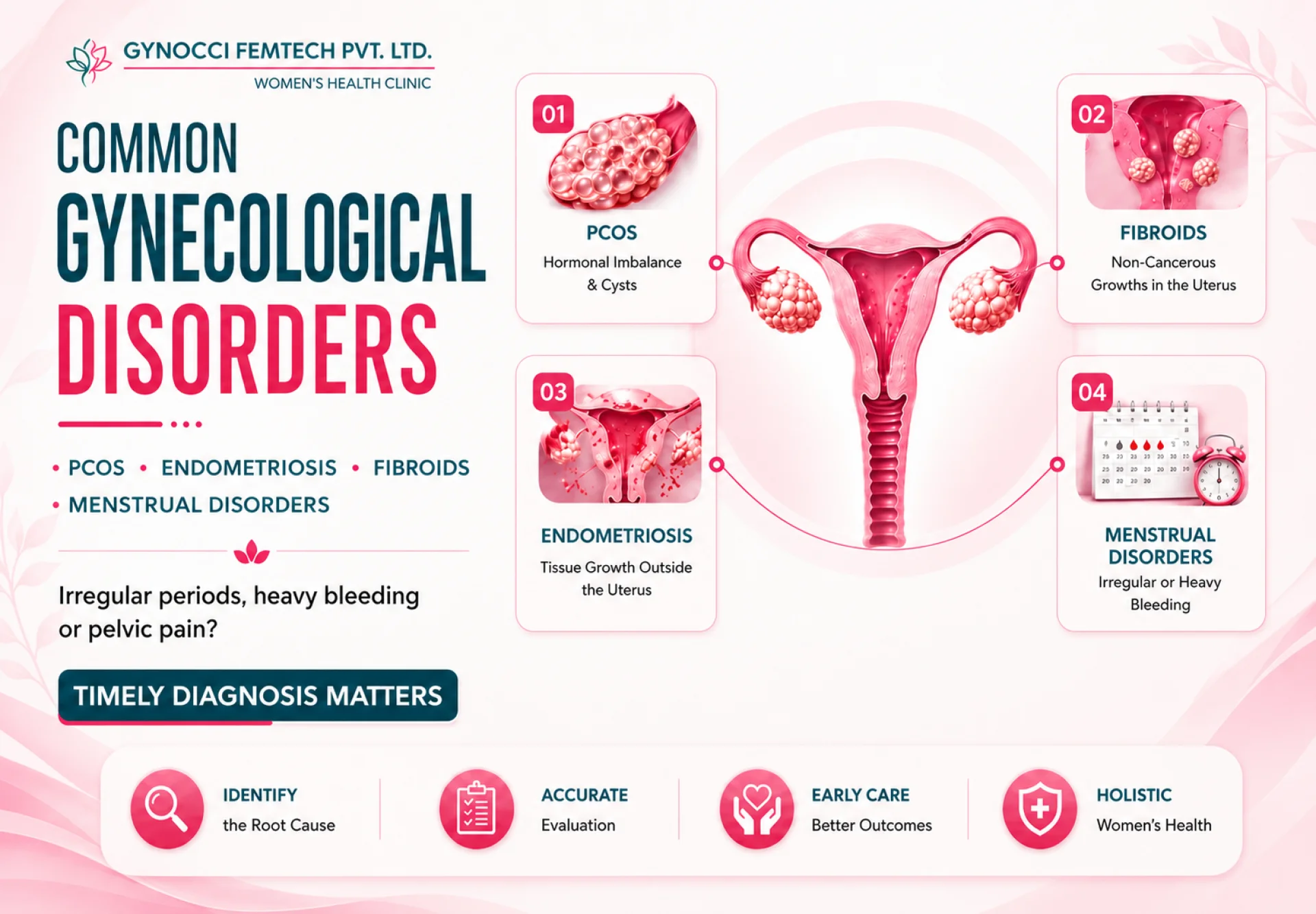
Gynecological disorders are very common among adolescent women and also women who have already gone through menopause. Every woman experiences one or more gynecological disorders at some point in their life. These disorders include menstrual disorders, PCOS, endometriosis, uterine fibroids, and urinary tract infections. Treatment for such disorders includes medications, hormonal therapies, lifestyle modifications, and surgeries.
What are gynecological disorders?
Gyno-related problems or gynecological disorders are conditions that affect the female reproductive system, which includes the uterus, ovaries, vagina, fallopian tubes, and vulva. These disorders can cause heavy menstrual bleeding, infertility, or irregular periods. The most common gynecological disorders include PCOS, endometriosis, and uterine fibroids.
In Ayurveda, gynecological disorders are known as Yonivyapad, which refers to the disorders related to the female reproductive system. These disorders include Artava dushti (menstrual irregularities), PCOS, endometriosis, and Shwetaparadara (White discharge), etc. Treatment focuses on balancing the doshas through lifestyle changes, diet, and herbal remedies.
Common Gynecological Disorders
- Menstrual disorders- Menstrual disorders include heavy menstrual bleeding (menorrhagia), irregular period, and painful period (dysmenorrhea), which are common in women.
- Polycystic ovary syndrome (PCOS) - It is a hormonal disorder in which fluid-filled cysts are formed on the outer layer of the ovary. It can cause many complications like fertility issues, anovulation, irregular periods, and metabolic issues.
- Endometriosis- In this condition, the same tissue that makes the uterine lining grows outside the uterus. This can cause pain, bleeding, and fertility issues.
- Fibroids – These are non-cancerous growths in the uterus that can cause heavy menstrual cycles, pelvic pain, and pain during reproduction.
- Sexually transmitted diseases (STDs) - Sexually transmitted infections like Chlamydia, gonorrhea, and HPV have a very bad effect on reproductive health.
- Pelvic inflammatory disease (PID)- It is a disease of the female reproductive system often caused by sexually transmitted infections.
- Chronic pelvic pain- It is long-term pain in the pelvic region.
- Gynecological cancer- Gynecological cancers include cancer of the uterus, ovaries, and cervix.
Symptoms of gynecological disorders
There are different symptoms that indicate different gyno related problems and one symptom can indicate more than one gyno related problems. The symptoms include-
- Heavy or irregular menstrual bleeding- Which can indicate PCOS, fibroids, or hormonal imbalance.
- Vaginal discharge and irritation- Unusual discharge and odour from the vagina can indicate infections.
- Pelvic pain- It can be caused by PID, ovarian cysts, or endometriosis.
- Pain during sex- It can indicate vaginal dryness, PID, or endometriosis.
- Menopausal symptoms- Night sweats, vaginal dryness, and hot flashes are some menopausal symptoms.
Causes of gynecological disorders
Factors that cause gynecological disorders include-
- Hormonal imbalance- When the levels of one or more hormones are imbalanced, it causes problems like Polycystic ovary syndrome (PCOS)
- Infection – Bacterial and yeast infections cause vaginal issues. Untreated sexually transmitted infections like HPV can cause pelvic inflammatory disease, which results in infertility.
- Genetics- Some genetic factors can cause ovarian cancer.
- Lifestyle factors- Lifestyle factors like stress, poor hygiene, bad diet, and weight
- Structural abnormalities- Abnormalities like growth of tissue same as the tissue in uterine lining ,outside the uterus causes endometriosis and non cancerous tumors knows as uterine fibroids cause heavy bleeding.
Diagnosis of gyno-related problems
Diagnosis of a gynecological disorder is different in the case of different disorders. The most common methods include questioning, physical examinations, imaging, and lab tests. The health care providers will ask questions before recommending any tests. The questions will be related to the symptoms, menstrual cycle, medical history, and family medical history. The diagnostic methods include-
Physical examination- Physical examination includes pelvic exam and breast exam, which helps the doctor Imaging test- Imaging tests include transvaginal ultrasound and abdominal ultrasound to check for fibroids and ovarian cysts. MRI and CT scans are also used in some cases.
Lab tests- These include Pap smear for cervical cancer and HPV test and blood test which is used to detect hormonal imbalance. Other methods include-
- Colposcopy – In this method, a colposcope is used to magnify the vagina and cervix for examination. Hysteroscopy- In this method, a long, thin plastic tube with a camera on the top is inserted into the uterine cavity to examine the uterus.
- Laparoscopy- In this method, a small incision is made in the abdomen, and a thin, long plastic tube is inserted into the lower abdomen to check for conditions like endometriosis and infertility.
- Biopsy- It is the method in which small tissue samples are taken from the cervix, vulva, or endometrium for diagnosis. Therapies for gyno-related problems
Ayurveda follows a holistic approach in the treatment of gynecological problems and focuses on balancing doshas with the help of panchkarma therapies, herbal medication, and diet and lifestyle changes. Key therapies include-
- Panchkarma therapy- Panchkarma detoxifies the body with the help of therapies such as Virechana and Vamana to eliminate toxins and balance the Pitta and Kapha doshas.
- Uttarbasti- It is a type of medicated enema in which medicated oil is incorporated into the uterus to treat tubal blockage and infections.
- Yoni prakshalan/dhawan- In this therapy vaginal is cleansed using medicated oil to maintain pH, treat infection, and reduce inflammation.
- Kati Basti- It is a therapy in which warm medicated oil is applied on the lower back to treat pelvic pain and pressure on the uterus.
- Rasayana therapy- In this therapy, herbs are used to balance hormones and improve overall health.
- Herbal medications- Herbal medicines like Shatvari, which is used to support the female reproductive system and regulate hormones, Ashwagandha, which helps manage stress and balances hormones, Kanchanar and Varuna are used to manage PCOS and cysts, Triphala and Guduchi help in improving metabolism and detoxification, and Lodhra and Ashoka are known to improve uterine health, are commonly used.
Diet and lifestyle
Diet
A nutrient-rich diet, along with iron-rich foods, green leafy vegetables, and warm, freshly cooked food, is recommended, which is easily digestible. Processed foods, oily and spicy foods, and junk food are avoided.Lifestyle
Doing regular exercise, yoga to improve circulation and reduce mental stress.At Gynocci, we have BAMS and MD doctors who are experts in Gynecological disorders and have a proven track record of treating these disorders with natural and ayurvedic therapies. All these gyno-related problems are treated successfully if they are timely diagnosed and taken care of. An untimely diagnosis can lead to severe issues and take longer to treat.
Treatment in modern medicine
Medication
– Medication like hormonal medicines, antibiotics, and pain relievers is used to treat various gyno-related problems.
Surgery
- In cases like fibroids, endometriosis, and other structural abnormalities, surgery can be used to remove excess tissue.
Lifestyle
- Lifestyle changes like a balanced diet, regular exercise, and reducing stress help manage gyno-related problems.
Other fertility treatments
- If the treatment does not work, then Assisted reproductive technology is used to help people conceive. These include methods like IVF (In-vitro fertilization) and ICSI (intra cytoplasmic sperm injection).
Frequently asked questions
What are the common gynecological problems?
The most common gynecological problems are irregular periods, endometriosis, PCOS, uterine fibroids, and vaginal infections. Other problems include pelvic inflammatory disease, sexually transmitted infections, and urine incontinence. These can be treated with various Ayurvedic therapies, herbs, diet, and lifestyle changes.
When to see a gynecologist?
Signs that tell you to see a gynecologist are-
- Bleeding or pain during sexual intercourse
- Pelvic pain
- Abnormal vaginal discharge
- Irregular periods
- Heavy bleeding
What herbs balance hormones?
Herbs like Ashwagandha, Shatavari, Vitex (chasteberry), Red Clover, and Black Cohosh help in balancing hormones and also reduce stress and detoxify the body.