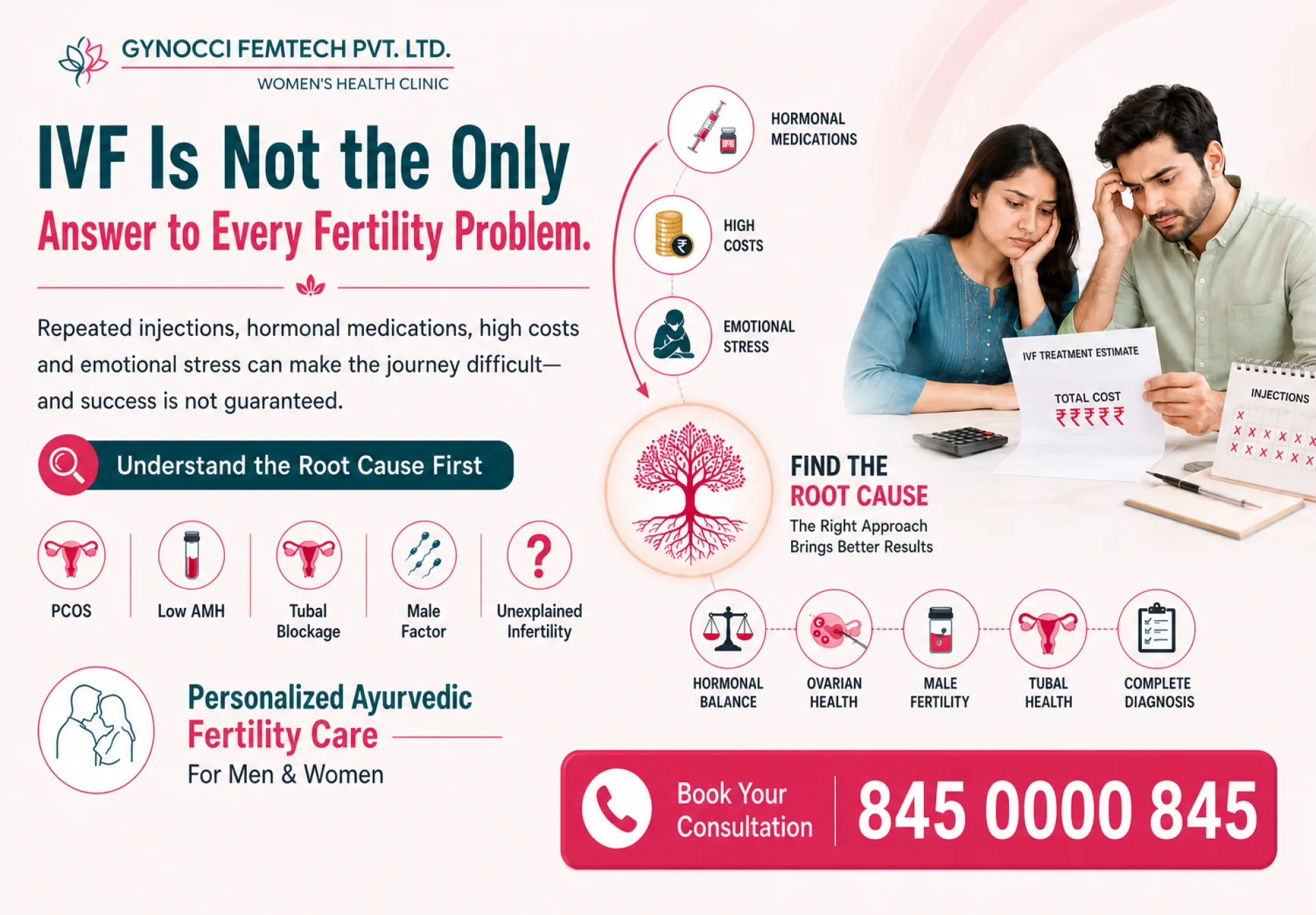
The one thing that affects a lot of couples around the world is infertility, which separates them from their dream of having a child; that is where assisted reproductive technologies step in. The most common and effective ART is IVF (in vitro fertilisation), which helps people suffering from infertility have a child. Many people think infertility is a taboo and then do not talk about it, and hesitate to meet a health care provider.
What is IVF?
It is an assisted reproductive technology (ART). It stands for in vitro fertilisation. In this process, the female gamete is fertilised with the male gamete in laboratory conditions, and then the fertilised egg is transferred into the uterus. The embryo implants into the uterine lining, and pregnancy takes place.
This method is recommended to people who are trying to conceive for a year or more but can’t get pregnant due to various issues, including sperm related issues, tubal blockages or unexplained infertility.
The one thing people always wonder before taking IVF treatment is the total cost of treatment. Understanding the step-by-step process of IVF gives you an idea of what the cost of treatment is at each stage of the process. This helps plan for treatment and avoid stress along the way.
Step-by-step IVF process
Before starting the treatment, the health care provider will recommend that you get your hormonal profile checked for a hormonal imbalance. Men are to go through semen analysis as a part of the pre-treatment evaluation. Doctors also recommend ultrasounds and screening to check for infections.
After the evaluation and check-ups are complete, the IVF treatment begins. It involves the following steps-
Controlled ovarian stimulation
This is the first step in the IVF cycle. The first thing the health care providers do is give you oral contraceptives for a few days, and after this, the treatment begins. Then a series of injections is given which contain gonadotropins that stimulate the ovaries to produce more than one mature egg cell. These injections are started on day 2 or 3, and the dose varies from patient to patient.
Egg retrieval
In this process, ultrasound is used to collect the follicles and follicular fluid with the help of a thin needle after the egg is fully matured and ready for fertilisation. This process is done under the use of light sedatives.
Sperm collection and fertilisation
Sperm is extracted from the males and processed in the laboratory. To fertilise the female gamete, the ICSI (intracytoplasmic sperm injection method is used. In conventional IVF, 50-100 processed sperm are placed with each egg and left for 15-18 hours to induce natural fertilisation. But if the sperm shows low motility, then the ICSI method is used.
Embryo transfer
After fertilisation takes place, the embryo is allowed to grow in laboratory conditions for 5-6 days. After 6 days, the embryo is transferred into the uterus under ultrasound guidance, but before transfer, some hormonal medication is provided in order to make the uterus lining ready for implantation. A thin catheter is used to put the embryo in the uterus. Progesterone supplements are started on the day of embryo transfer to ensure continuation of pregnancy.
Total cost of IVF treatment
The steps included in the process determine the cost of the treatment. Normally, clinics charge for consultation, gamete extraction, ultrasound, semen processing, embryo transfer, ICSI lab and OT.
| S.No, | Process | Avg Cost (INR) | What is Included |
| 1 | Pre-treatment consultation and tests | About 15000 to 35000 | Includes physical examinations, semen analysis, hormonal tests and ultrasound. |
| 2 | Ovarian stimulation | About 45000 to 80000 | Includes hormonal injections and medications used to stimulate the ovary to produce more than one mature egg cell. |
| 3 | Egg retrieval and lab culture for semen and egg along | About 45000 to 80000 | Includes egg retrieval under sedation, sperm processing and lab fertilisation of the eggs. |
| 4 | Embryo transfer | About 50000 to 70000 | Includes the transfer of embryos into uterus |
| 5 | Total cost | About 1.5 lakh- 2.5 lakh | This is an average range and may vary based on additional procedures, individual and medications. |
Additional procedures
As the advancement in technology continues to enhance the precision of this method the cost of add-on procedures will increase the overall cost of the procedure.
- ICSI- It is used in the case of male infertility factor where the sperm is less motile and struggles to fertilise the egg. Cost + 15000 to 45000 INR
- Donor sperm/egg- Donor egg and sperm are used in case one or both partners do not have healthy gametes for fertilisation.
- Cost of donor sperm: 15000 to 18000 INR
- Cost of donor egg- 80000 to 150000 INR
- Blastocyst culture: In this process, the embryo is grown in the lab for 5 days before implantation to improve the success rate. Cost 10000 to 25000
- Frozen embryo transfer- It is the process in which embryos are preserved by freezing and storing at low temperature and used in future fertilisation. Cost 25000 to 60000 INR
After adding additional procedures, the total cost can reach up to 3.5 lakhs. The costs that are mentioned above are based on the average cost of treatment across India.
What is the success rate of IVF?
The success rate of IVF treatment depends on the age of the patient and various other factors. As technology advances, the success rates increase. The following are some factors that influence the success rate in India-
- Age: In females, the quality and quantity of eggs decreases.
- Health issues- Diseases like PCOS, thyroid issues and tubal blockage can hinder the process.
- Lifestyle- Lifestyle habits like unhealthy diet, smoking, drinking, and a sedentary lifestyle create complications in the process.
- Clinic- Success rate also depends on the clinic's experience and the technology they are equipped with. You should always choose a trusted clinic with all the new technology.
IVF success rate in India
India has become an international centre for fertility care with lower prices and better care compared to other countries. As we know, the success rate depends on age, and the success rate for women under 35 years in India is 52%. The following is a chart showing the IVF success rate according to age.
| Age | Success Rate |
| Under 35 | 52% |
| 40 | 20% |
| 41 | 15% |
| 42 | 12% |
| 43 | 8% |
Conclusion
IVF has become common among people facing infertility, and it has proven very helpful to many. Even if there are a lot of factors influencing the chances of conceiving, advancements in technology increase the chances of success in IVF. So choosing the best clinic for IVF treatment really helps get pregnant, but at a much higher cost and loads of adverse effects of hormonal therapies on our body. Also read compare IVF vs Ayurveda.
FAQs (Frequently Asked Questions)
Does IVF have a 100% success rate?
No, IVF is not 100% successful; it increases the chance of pregnancy. The success rate depends upon many factors, such as age, in which the success rate ranges from 30-50% per cycle for women under 35, and after that it decreases with increasing age.
What is the cost of the five stages of IVF?
The total cost of the five stages of IVF ranges from 1,00,000- 3,50,000 in India. The five stages include - pre-cycle diagnostics (₹15k–₹35k), ovarian stimulation/medications (₹45k–₹80k), egg retrieval & fertilisation (₹45k–₹1,00,000), embryo culture (included in retrieval), and embryo transfer (₹20k–₹35k).
Which age is best for IVF?
The best age for the IVF procedure is under 35 years. The age between late 20s to early 30s is ideal as the egg and sperm quality is better at this age and the success rate is high, 30-50%.