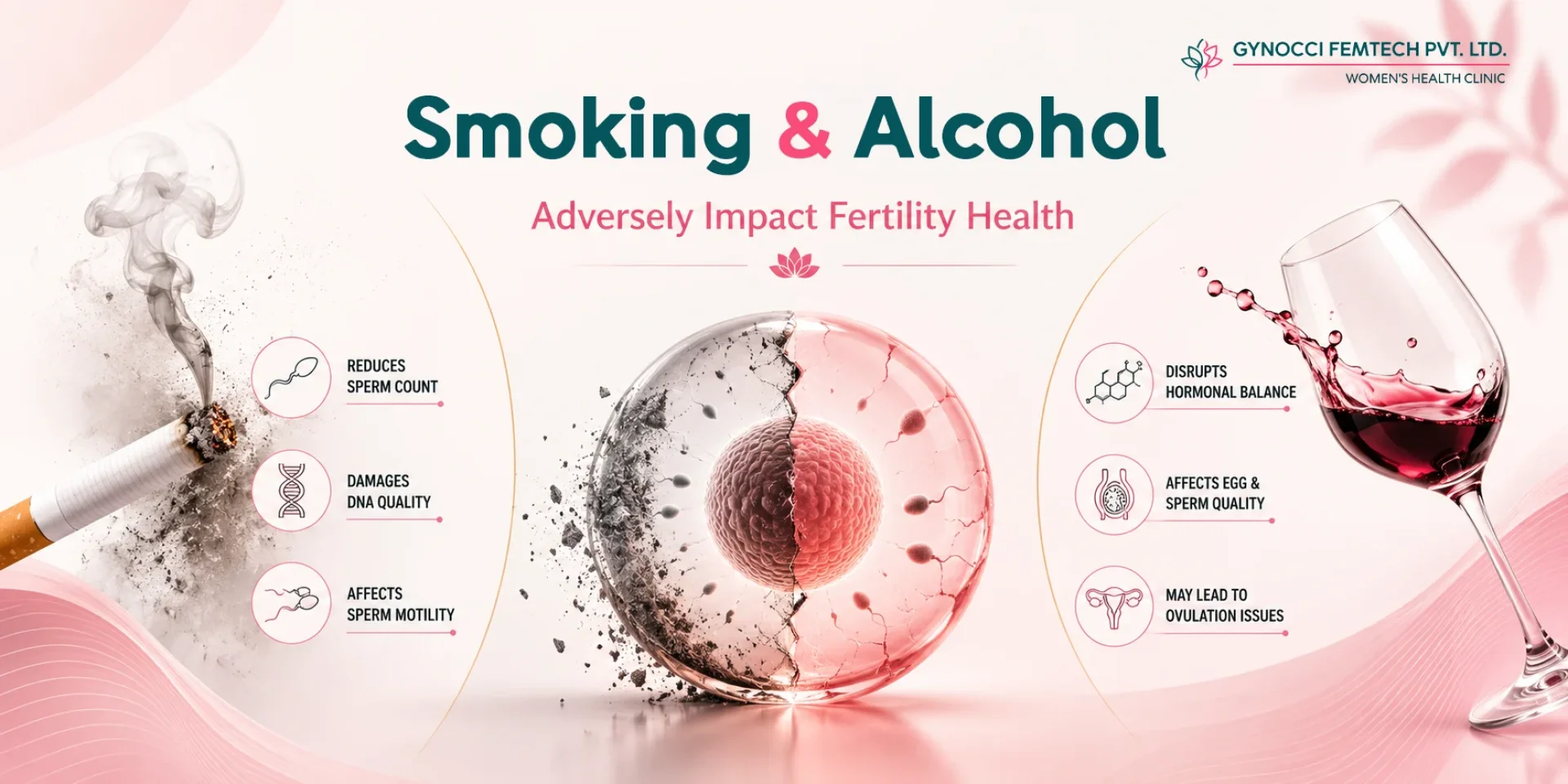
A lot of people are addicted to smoking tobacco and drinking alcohol. While these give you short-term pleasure, they have a bad effect on overall health in the long run. Smoking and drinking alcohol can have a very bad impact on fertility for both men and women. Smoking can cause low sperm count, imbalanced hormones, and damage to DNA, eggs, and sperm, while alcohol can cause erectile dysfunction and low sex drive. Both can cause miscarriages as well as infertility. Avoiding these habits can reverse their effects.
What is Infertility?
Infertility is a disease of both the male and female reproductive systems, and it can be defined as the inability to conceive after having unprotected sexual intercourse for more than 12 months. Infertility affects 8-12% of couples around the world, and it can be caused by both male and female factors.
How do smoking and alcohol impact fertility in both males and females?
The habit of smoking and drinking alcohol is very bad for reproductive health and overall health of a person. They affect the reproductive health of males and females in a different way. In males, it can cause low sperm count or abnormal morphology, etc. In females, it can cause early menopause, poor egg quality, etc. which can cause a number of problems like difficulty in conceiving, miscarriages and infertility.
Impact on male fertility
Alcohol
- Low sperm count- Alcohol consumption can imbalance hormones and lower testosterone levels, which leads to less sperm production
- Reduced sperm motility- Alcohol affects the sperm by damaging their ability to swim towards the egg effectively.
- Abnormal shape of sperm- Alcohol intake in higher amounts can cause abnormal shape of the sperm and cause infertility. Smoking
- DNA damage- Smoking tobacco causes DNA fragmentation, which results in miscarriage and genetic defects.
- Poor sperm quality- Due to smoking, sperm quantity, quality, and motility are highly reduced.
- Erectile dysfunction- The chemicals present in cigarettes and tobacco, like nicotine, can hinder blood flow and cause difficulty getting an erection.
Impact on female fertility
Alcohol- Alcohol consumption in little and controlled amounts does not cause any damage, but excessive consumption can lead to fertility issues like-
- Poor egg quality- Excessive alcohol consumption can lead to an imbalance in hormones, which affects ovulation and leads to a reduced quality of eggs.
- Reduced fertilization rate- When the egg quality is poor, it results in low fertility rates, which can’t be helped even with assisted reproductive technologies.
- Reduced egg survival rate- Poor quality eggs are not able to survive in laboratory conditions for long due to high alcohol consumption.
Smoking
- DNA damage- The genetics of an egg can be damaged due to the chemicals present in cigarettes.
- Impaired implantation- Smoking damages the lining of the uterus, which makes it hard for a fertilized egg to attach to it.
- Early menopause- Smoking can shorten the reproductive age and cause early menopause.
What to do?
Some of the effects of smoking cannot be reversed, but most of them are reversible and treatable. Quitting smoking and alcohol can cause improvements in both males and females. For males, sperm count and quality improve within a few months as new sperms are produced every 3 months.
Along with quitting, a healthy diet with all the nutrients and daily exercise helps you recover faster. For females, reducing the intake of both can improve overall reproductive health and chances of conceiving. So quitting smoking and drinking is the best way to improve most of the fertility issues.
How to treat infertility?
Treatment of infertility is available in both Ayurveda and modern medicine, but Ayurveda mainly focuses on the root cause rather than treating only the symptoms.
- Quit smoking- After smoking for a long time it can become an addiction and you may need to seek professional help to quit.
- Reduce alcohol intake- If you can’t quit alcohol just take it in small amounts occasionally which is not that harmful.
- Incorporate a healthy diet- Eating nutrient rich food like fruits, vegetables, whole grains and protein sources can help make you reproductive system healthy.
- Regular exercise-Regular exercise and yoga helps maintain body weight and calmness.
- Stress management- Manage stress through meditation and yoga to reduce stress.
- Consult a health care provider- If you want further treatment you consult a health care expert and get guided for further procedures.
In Ayurveda
Ayurveda follows a holistic approach in the treatment of any disease and provides natural treatment. Various Ayurveda therapies and herbs are involved in the treatment of infertility, such as Panchkarma Ayurveda and shaman chikitsa. But the most important treatment in case of smoking and drinking is immediate cessation of these habits. This reverses the effect of cigarettes and alcohol in 2-3 months.
Shodhan Chikitsa
In Panchkarma Ayurveda, our body is detoxified, and it is made to regenerate itself naturally. In panchakarma, the harmony of the body is balanced by five procedures-
- Virechana, which balances pitta, improves liver function and hormones;
- Vamana, which balances kapha;
- Basti, which regulates vata and supports ovulation and sperm health;
- Nasya, which detoxifies the brain and balances hormones
- Raktamokshana, which purifies blood.
These treatments support reproductive health along with the overall health of a person.
Shaman Chikitsa
Shaman Chikitsa refers to treatments that balance the Doshas using Ayurvedic herbs, diet, and lifestyle changes without intensive detox procedures. These therapies help improve digestion (Agni), nourish reproductive tissues (Shukra and Artava Dhatu), and restore hormonal balance, supporting natural fertility.
Ayurvedic Herbs
Ayurvedic herbs like
- Ashwagandha (Withania somnifera): A renowned Rasayana and Vajikarana herb, Ashwagandha helps reduce stress, strengthen the body, and nourish Shukra Dhatu. It supports healthy sperm production, improves vitality, and helps balance hormones affected by stress.
- Shatavari (Asparagus racemosus): Traditionally known as the primary female reproductive tonic, Shatavari nourishes Artava Dhatu, supports hormonal balance, regulates menstrual cycles, and strengthens uterine health. It also supports ovulation and reproductive nourishment.
- Gokshura (Tribulus terrestris): Gokshura is widely used in Ayurveda to support male reproductive vitality. It helps strengthen Shukra Dhatu, supports healthy testosterone balance, and promotes reproductive strength while also benefiting urinary and kidney health.
- Lodhra (Symplocos racemosa): Lodhra is valued for supporting uterine health and hormonal balance in women. It helps regulate menstrual health, supports the reproductive system, and balances Pitta and Kapha in the female reproductive organs.
Treatment in modern medicine
Treatment in modern medicine is not as deep as Ayurveda, as it focuses on the treatment of symptoms. Treatment in modern medicine involves immediate lifestyle changes, medication, and ART methods to overcome infertility. Below are the treatments involved in the treatment of infertility-
Intrauterine insemination- In this method, sperm is cleaned and prepared and is carefully inserted into the uterus using a catheter (a flexible, tiny tube).
Fertility medication- These are artificial hormones that help to balance hormones and also help in ovulation at desired times. These medicines include letrozole and clomid, which are ovulation-stimulating, and gonadotropins are used for both males and females.
- Surgery- This includes removing any blockages in the fallopian tubes or treating scarring or endometriosis.
- ART- Assisted reproductive technologies are more advanced methods to help patients deal with infertility. These include
- IVF- In-vitro fertilization
- GIFT- Gamete intrafallopian transfer
- ZIFT- Zygote intrafallopian transfer
- ICSI- Intracytoplasmic sperm injection
Changing lifestyle includes quitting smoking and alcohol. Leaving these will help recover faster with treatments, side by side.
FAQs
Can I get pregnant if I smoke and drink?
Smoking and drinking are very well known to have adverse effects on fertility in both males and females. The use of nicotine, cannabis, and tobacco is very harmful to fertility.
How long after quitting smoking does female fertility improve?
In the case of female fertility, overall reproductive health improves after 2 months of quitting. After 3 months, the fertility chances are the same as those of a person who has never smoked.
Can I smoke while I try to conceive?
No, you should quit smoking tobacco now if you are trying to conceive. Quitting helps get a healthy pregnancy and a healthy baby.
Does consuming alcohol affect sperm immediately?
Yes, alcohol consumption can have an immediate effect on sperm motility and volume, while more severe effects show up after a continued and regular use of alcohol over time. Daily and heavy drinking of alcohol can immediately cause sperm motility issues, volume issues and deformation in the sperm while in the long run it can cause reduced sperm production, low testosterone levels and sperm DNA damage.