When you are planning a pregnancy and you get diagnosed with Fibroids, there can be a little uncertainty and some questions associated with it. Uterine fibroids are very common non-cancerous outgrowths that grow on the wall of the uterus. Fibroids affect nearly 70% to 80% of women till the age of 50. Fibroids are mostly asymptomatic; in some cases, they can cause heavy menstrual bleeding, back pain, etc. The most common question is: Do these fibroids affect fertility and pregnancy?
There are many cases of natural and healthy pregnancy in women with fibroids. In some cases, uterine fibroids may affect fertility and pregnancy depending on various factors such as their size, number, and location. Let us understand this.
Uterine fibroids
In Ayurveda, uterine fibroids (गर्भाशय ग्रंथि) are also known as Mamsa granthi because fibroids are muscular outgrowths from the uterine wall. Uterine fibroids are solid muscular growths, so their formation is linked with accumulation of excess Kapha dosha and Vata dosha, which together can affect reproductive health.
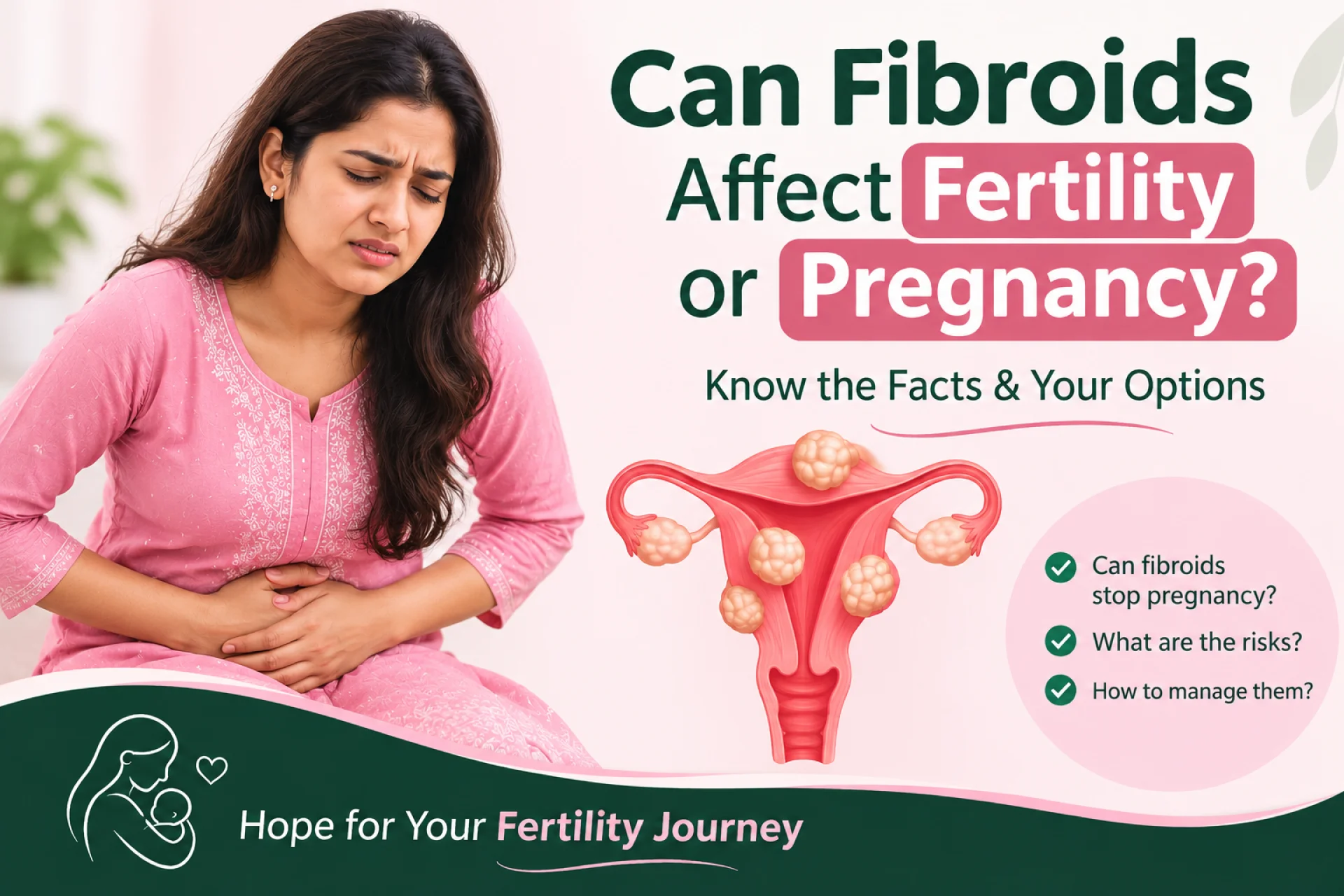
Fibroids are of different types; the most common are the Intramural fibroids, which grow in the muscular wall of the uterus. Other types include Submucosal (grow under the uterine lining), Subserosal (grow under the outer surface of the uterus), and Pedunculated fibroids (mushroom-shaped, attached to the uterus with a stem).
How do fibroids affect fertility?
Whether a fibroid will affect fertility or not, it totally depends on the location, size, and number of the outgrowths in the uterus. Intramural fibroids, which grow in the wall of the uterus, if they grow large or deform the uterine cavity, can hinder blood flow and decrease fertility. If they are small, they have very little effect.
Submucosal fibroids, which grow under the uterine lining, they affect fertility a lot. They prevent implantation of the embryo. , lowers conception chances, increases the risk of early miscarriage, and alters the lining of the endometrium.
Subserosal fibroids grow under the outer surface of the uterus, so they do not affect fertility.
If fibroids develop near the cervix or opening of the fallopian tube, then they can block the sperm from reaching the egg or a fertilized egg from reaching down to the uterus. When the uterus is deformed or irritated, it can reject a fertilized egg.
How do fibroids affect pregnancy?
Whether uterine fibroids affect pregnancy also depends on their size, location, and number. These fibroids may increase the risk of certain complications during pregnancy, labor, and childbirth. During pregnancy, when the uterus grows, large fibroids may increase in size more and cause a painful condition known as red degeneration. It causes sudden abdominal pain or a mild fever.
Submucosal fibroids that interfere with implantation or early placental development increase the risk of early miscarriages. Fibroids large in number and size irritate the walls of the uterus and trigger early contractions, leading to premature delivery.
The large fibroids take up more space in the uterus, leaving a small room and decreased blood supply for the foetus, causing Fetal growth restriction (FGR). Also, the small room left for the foetus can stop the baby’s movement and stop it from getting into the ideal position before birth.
Due to the abnormal fetal position, obstructed labor, and high chances of bleeding, women with fibroids during pregnancy have a higher rate of going through Cesarean delivery.
Can fibroids be treated?
Uterine fibroids have treatment options in both modern medicine and Ayurveda.
Modern medicine
Modern medicine uses over-the-counter medicines to provide relief from pain and control bleeding. Hormonal medicines are also used, such as birth control pills, progestins, or GnRH antagonists that regulate menstrual cycles and temporarily shrink fibroids. The fibroids revert back to its original size once after the medication is stopped.
Surgical options used are myomectomy, in which fibroids are removed and the uterus is kept intact, and hysterectomy, in which the uterus is completely removed, which is a permanent cure for fibroids.
Other minimally invasive options are uterine artery embolization, which blocks the blood supply to the fibroids, causing them to shrink .Focused ultrasound surgery, in which ultrasound waves are used to destroy the fibroid tissue.
Ayurvedic medicine
Ayurveda focuses on breaking down the process of the disease and treating it by balancing the doshas and eliminating toxins from the body through detoxification, rather than treating the symptoms of fibroids. As fibroids happen due to imbalanced Vata and Kapha doshas, dosha balance is an important part of the treatment.
Treatment methods involve: -
Panchakarma therapy: - Before giving any herbal medication, a doctor ensures the detoxification of the body with different Panchakarma therapies, which include Virechana (eliminates toxins from the blood, maintains physiological balance) and Basti (enema with medicated oil and decoctions for Vata imbalance).
Herbal medications: Herbs and classical formulations are used to support the management of symptoms like heavy bleeding and pain. These include Kanchanar Guggulu (for tumors, cysts and benign tissue or muscle growths), Varunadi kashayam (helps clear blockage, fluid balance, Vata and Kapha imbalance), Vriddhivadika vati (reduces pelvic pressure), Saptasaram Kashayam (relieves painful periods, pelvic and back discomforts) and Ashoka and Lodhra (manages excessive menstrual bleeding).
Along with these treatments, lifestyle and diet changes are also prescribed by the health care professional at Gynocci and other Ayurvedic clinics.
When to see a doctor?
When you start experiencing severe symptoms, or when you are diagnosed after you have experienced discomfort for a long time, you should meet a gynecologist and discuss your treatment options.
If you experience sudden severe pelvic pain which is accompanied by fever, nausea, or vomiting, you should immediately meet a doctor, or if you have very heavy bleeding during menstrual cycles (Menorrhagia - which can cause anemia.)